
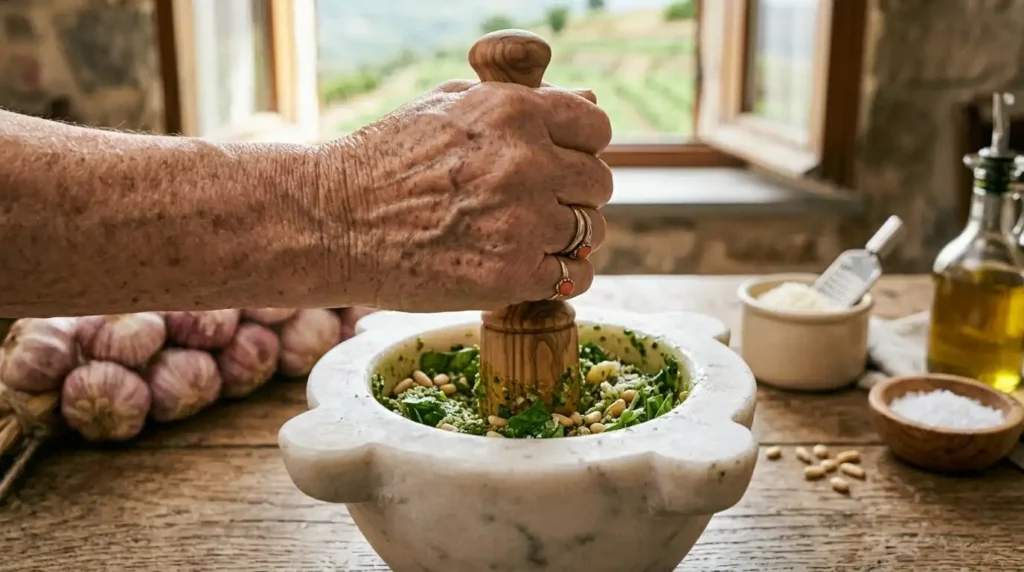

What is Genoese pesto?

Genoese pesto is one of the most iconic condiments in Ligurian and Italian cuisine, appreciated for its fresh aroma, deep green color, and its balanced taste of basil, extra virgin olive oil, pine nuts, garlic, and aged cheeses. In its traditional version, pesto is made with simple but high-quality ingredients, carefully processed to obtain a fragrant, smooth, and richly flavored sauce.

In this complete guide to Genoese pesto, you’ll find everything you need to know: which ingredients are used, how to recognize a well-made pesto, how to pair it with pasta, how to store it properly, and which mistakes to avoid so as not to ruin its color, texture, and flavor. It’s a resource designed for those who truly want to understand pesto, use it at its best in the kitchen, and find clear answers to the most common questions.

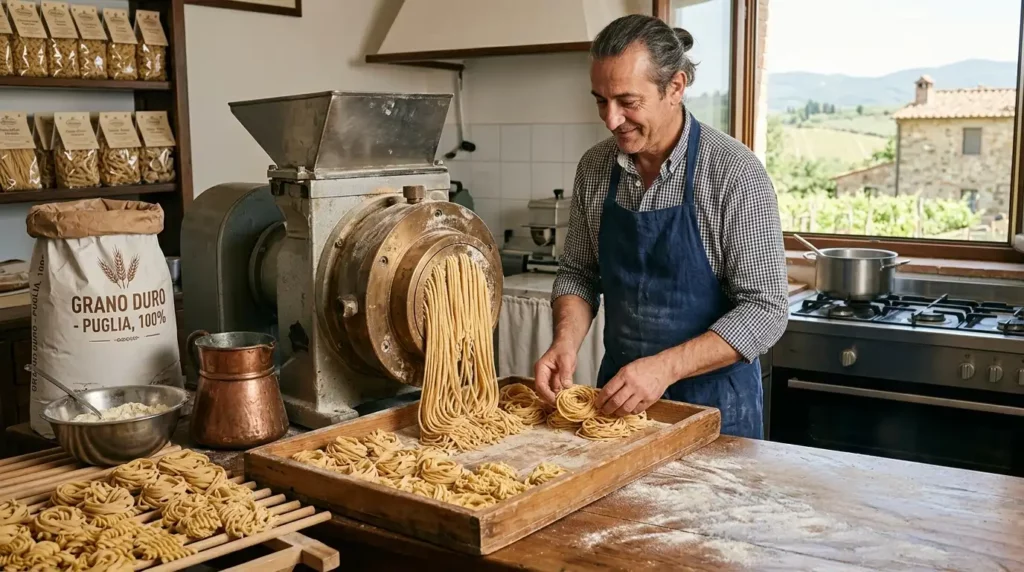
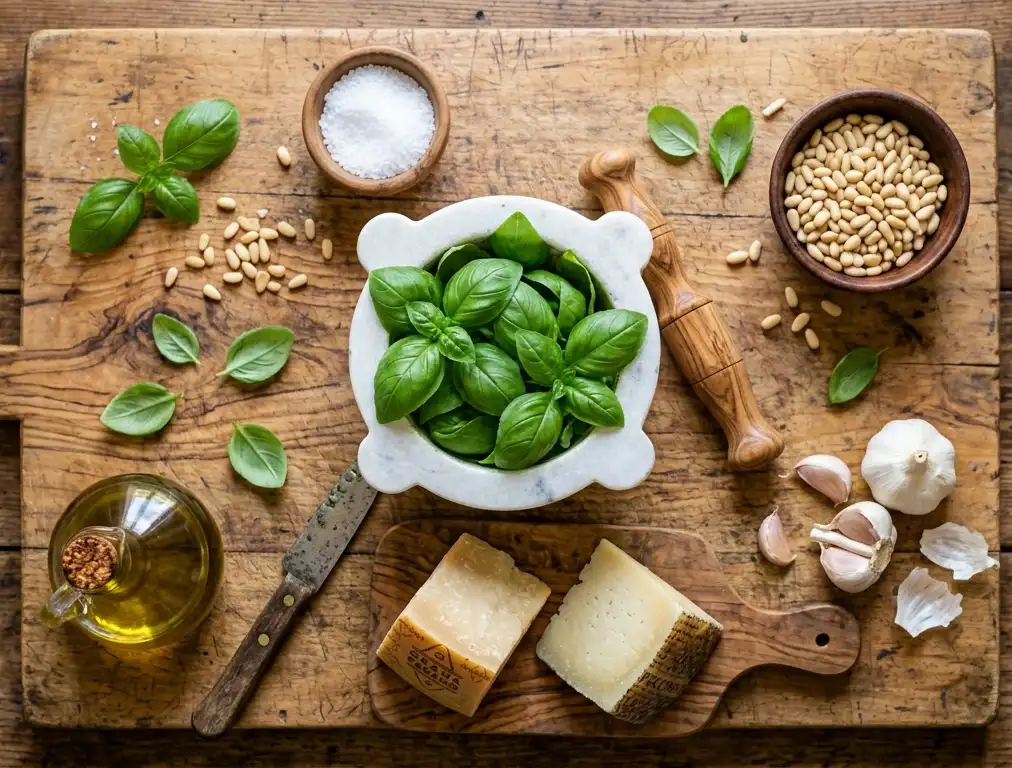
ingredienti pesto genovese fresco foto quadrata

1. What are the ingredients of authentic Genoese pesto?

The real Genoese pesto is made from a few traditional ingredients that are simple yet essential to achieve an authentic, fresh, and well-balanced flavor. In its classic version, pesto is prepared with Genoese basil, pine nuts, Vessalico garlic, salt, extra virgin olive oil, and aged cheeses, in particular Grana Padano and Pecorino.

The most important ingredient is basil, which gives pesto its characteristic aroma and bright green color. Alongside basil, pine nuts add softness, garlic provides intensity, the cheeses bring savoriness and structure, while extra virgin olive oil binds everything into a smooth and velvety cream.

In Ligurian tradition, the quality of the ingredients truly makes the difference: it is not enough to use “similar ingredients,” because changing the type of basil, cheese, or oil can lead to a result that is very different from authentic Genoese pesto. That is why understanding the real ingredients is the first step to recognizing a well-made product or preparing it correctly.

foto di un piatto di pasta al pesto sono trofie

2. How to use Genoese pesto correctly?

Genoese pesto should be used gently, since it is a raw sauce and excessive heat can ruin its aroma, color, and flavor. For this reason, it should not be cooked directly in a pan like a traditional sauce, but added to pasta only at the end, after loosening it with a little cooking water.

The best way to use it is to place it in a bowl, dilute it with a small amount of pasta cooking water, and then mix it with the chosen pasta shape until you get a smooth, creamy, and well-coated sauce. This way, the pesto stays more fragrant, distributes evenly, and keeps its creamy texture without becoming dry or overly thick.

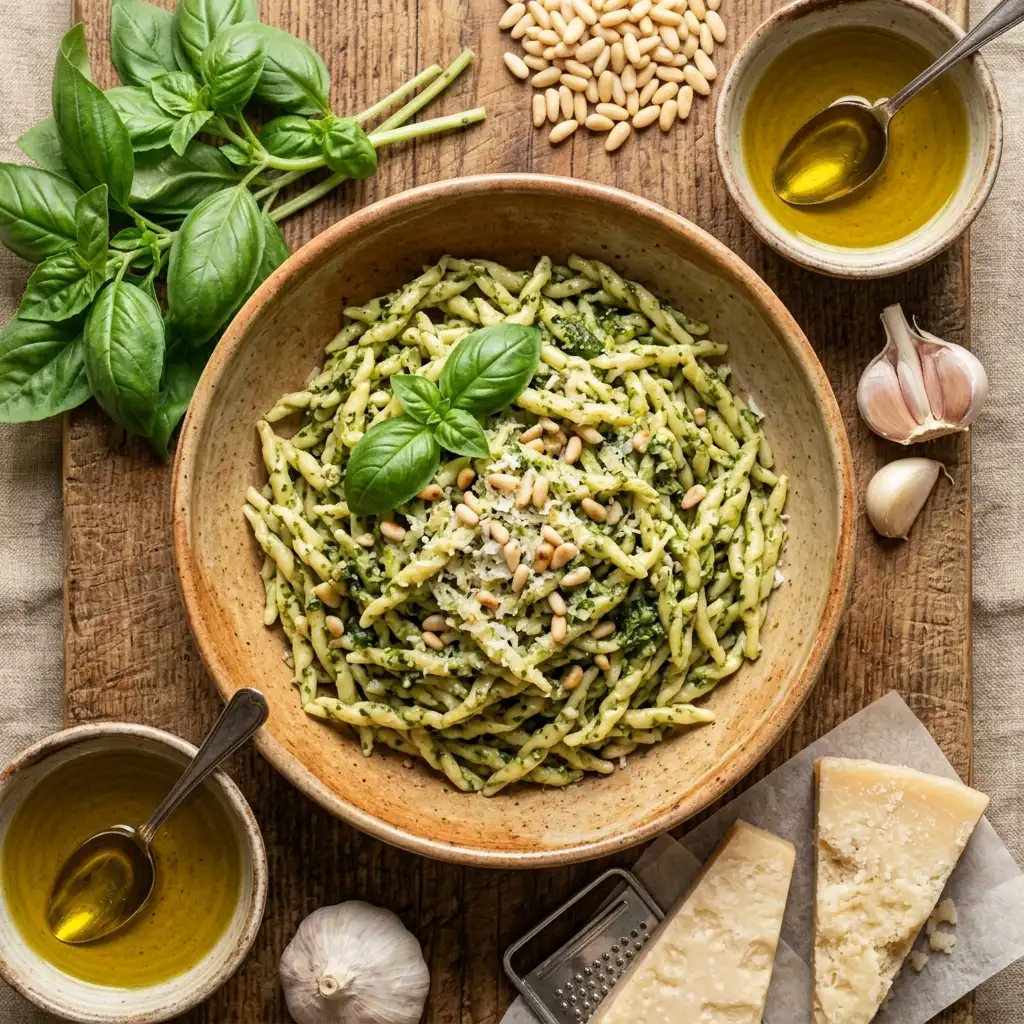
Genoese pesto pairs especially well with trofie, trenette, linguine, and gnocchi, but it can also be used on bruschetta, focaccia, sandwiches, or as a finishing touch on potatoes, vegetables, and cold dishes. The important thing is not to overuse it or cover its flavor with overly strong ingredients, so its aromatic balance can truly stand out.

discover our authentic recipes
conserare il pesto genovese come

3. How to store fresh pesto without ruining it

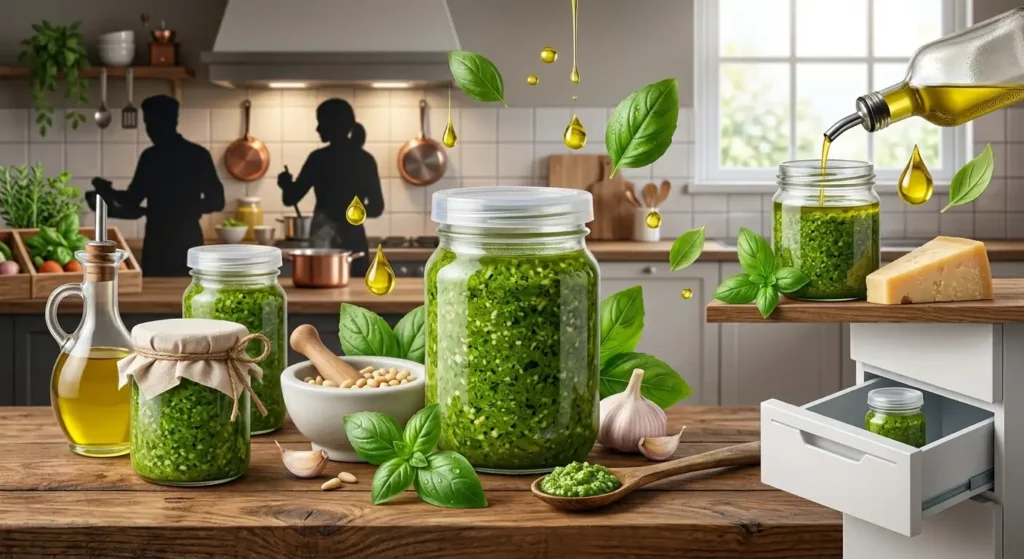
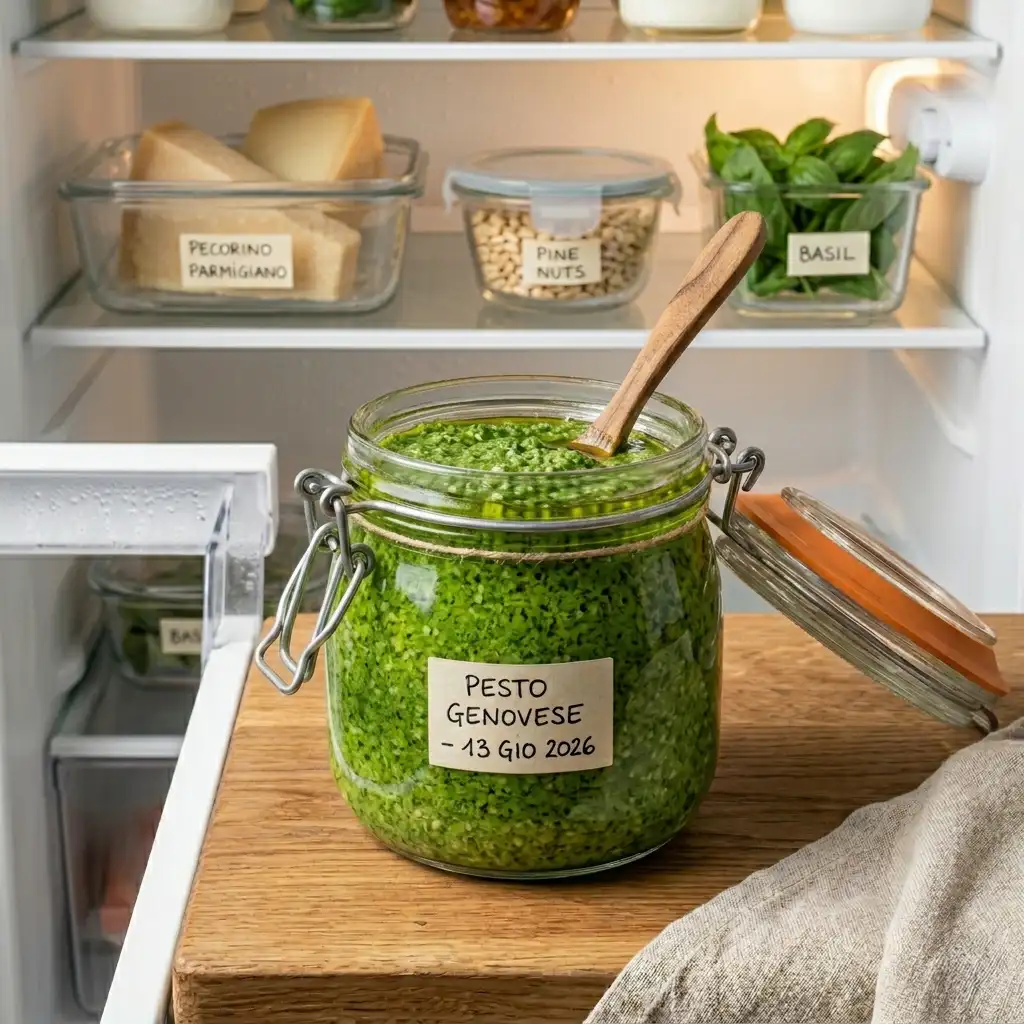
To store fresh pesto without altering its flavor, color, and aroma, it is important to protect it as much as possible from air, light, and heat. The best method is to place it in a clean, tightly sealed container, smooth the surface, and cover it with a thin layer of extra virgin olive oil, which helps reduce contact with oxygen.

In the refrigerator, fresh pesto lasts only a few days and should always be kept well sealed, preferably in small portions so it does not need to be opened too often. Each time you use it, it is best to take only the needed amount with a clean spoon to avoid contamination and keep the product more stable.

If you want to store it for longer, you can also freeze it in small portions, such as single servings or ice cube trays. This makes it more convenient to use, allows it to thaw faster, and helps preserve its qualities better, reducing waste and maintaining the pesto’s quality for longer.

How to Keep Fresh Pesto (and Make It Last Longer)

4. Why Genoese pesto is different from other pestos

Genoese pesto is different from other pestos because it has a precise, recognizable identity deeply rooted in Italian tradition. Its flavor comes from a unique balance of basil, pine nuts, garlic, aged cheeses, and extra virgin olive oil, processed to create a fresh, fragrant, and harmonious cream.

Unlike many other variations, Genoese pesto is not just a green sauce, but a preparation with well-defined characteristics. There are indeed pestos made with arugula, pistachios, zucchini, sun-dried tomatoes, or other bases, but Genoese pesto remains the most recognizable and representative in terms of flavor, tradition, and widespread use.

Not surprisingly, when people refer simply to “pesto,” they almost always mean Genoese pesto. This happens because it is the most famous, iconic, and widespread version in the perception of Italian cuisine, often considered the ultimate pesto.

For this reason, true Genoese pesto stands out not only by name, but also by its aromatic profile, ingredient quality, and strong connection to Ligurian tradition. It is this clear identity that makes it different from all other pestos.


il benessere del pesto. famiglia che mangia il pesto

5. Genoese pesto: calories, nutritional values and properties

Genoese pesto is a rich, intense, and nutrient-dense sauce made with ingredients that provide not only flavor but also an interesting nutritional profile. Extra virgin olive oil, basil, pine nuts, and aged cheeses contribute to making it a complete condiment, characterized by fats, proteins, minerals, and naturally occurring plant compounds found in its raw ingredients.

From a nutritional standpoint, pesto contains mainly unsaturated fats, largely derived from extra virgin olive oil and pine nuts, along with a portion of proteins and calcium provided by the cheeses. Basil enriches the sauce with natural aromatic compounds and antioxidant plant substances, while extra virgin olive oil is valued for its vitamin E and polyphenols, often associated with a varied and high-quality diet.

Pine nuts also contribute to the value of pesto thanks to their content of unsaturated fats, minerals, and micronutrients, while the cheeses increase its structure, savoriness, and nutritional density. The result is a concentrated, flavorful, and substantial condiment that can fit into a balanced diet when used in the right amounts.

More than just a simple sauce, Genoese pesto is a preparation rich in identity, flavor, and nutritional value. For this reason, it should be considered not as a secondary addition, but as an ingredient capable of giving character, energy, and depth to a dish.

Genoese pesto is therefore not only a flavorful condiment, but also a sauce that provides unsaturated fats, vitamin E, polyphenols, calcium, and other nutrients present in its traditional ingredients.


6. Historical curiosities and traditions linked to Genoese pesto

Genoese pesto is one of the most representative recipes of Ligurian cuisine, but its history is more nuanced and interesting than one might think. Although today it is perceived as an ancient and almost unchanged symbol, its modern form was actually defined in the 19th century, when the first written references attributed to Genoese tradition appeared. The codified recipe is linked to Giovanni Battista Ratto and the Cuciniera Genovese, a text that for the first time records a “battuto” of basil, garlic, cheese, pine nuts, and oil intended to dress pasta.

Before reaching this now-classic form, pesto has deeper roots in a longer history of pounded sauces, mortars, and everyday cooking. Among its most cited ancestors is Ligurian agliata, a widespread medieval garlic-based preparation, considered by several sources one of the direct precursors of pesto. Even further back in time, the Roman moretum is often mentioned—a rustic sauce made of herbs, cheese, and garlic pounded together, showing how the idea of creating a condiment through grinding ingredients already existed in antiquity.

An interesting detail is that pesto was not originally identical to what we now consider its “definitive” version. Early historical recipes in fact show a cuisine still evolving, where the preparation was gradually refined until it reached the balance we now associate with authentic Genoese pesto. This evolution is precisely what makes it so fascinating: it was not born perfect in a single moment, but is the result of a long gastronomic development.

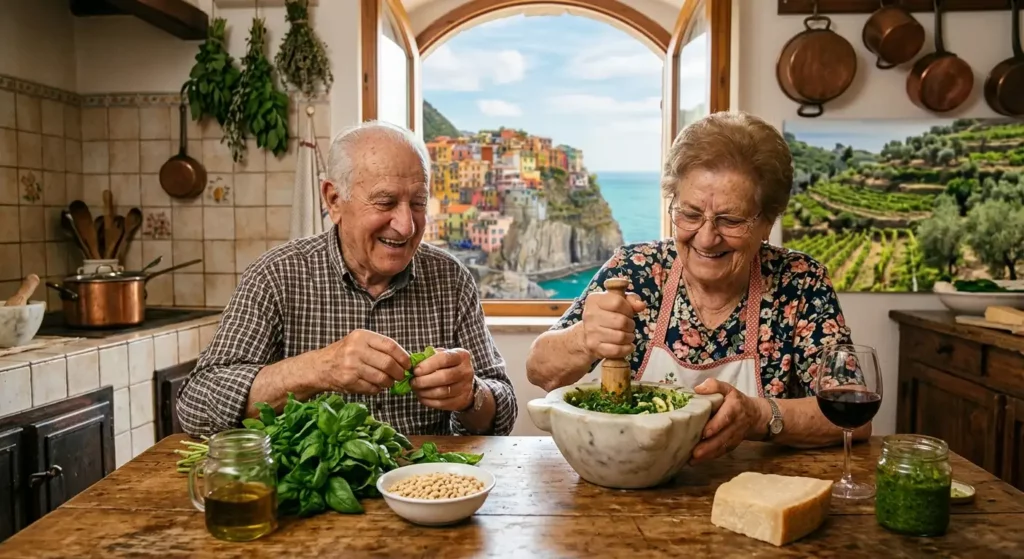
Even its name tells us a lot about its identity. “Pesto” comes from the act of pounding ingredients in a mortar, and it is not just a technical description: it reflects a culinary culture based on precise gestures, patience, and the manual transformation of ingredients. For this reason, the mortar has become not only a tool, but a true symbol of Genoese pesto and its tradition.

Alongside documented history, there are also popular tales and local traditions that have increased its cultural appeal over time. Some legends connect the origin of pesto to the Prà area and its basil, now closely associated with this specialty, but these stories should be understood for what they are: part of the narrative and cultural heritage of pesto, rather than strict historical evidence. And it is perhaps precisely this blend of fact, memory, and imagination that makes Genoese pesto more than just a sauce: a true cultural symbol of Liguria and Italian cuisine.

aglio per il pesto aglio di vessalico

7. Which garlic should be used for Genoese pesto?

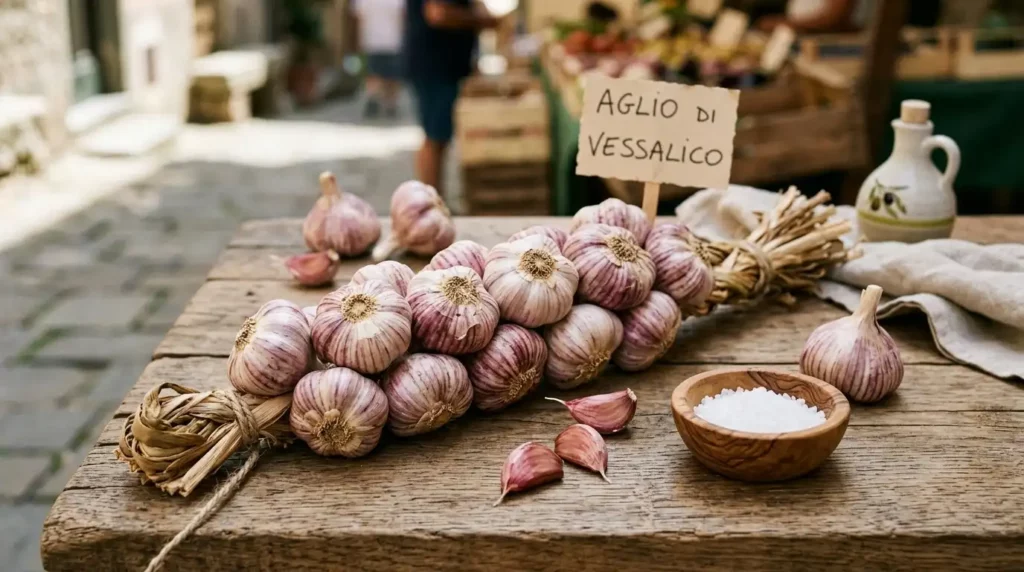
Vessalico garlic is one of the most highly regarded ingredients when it comes to quality Genoese pesto, thanks to its intense yet refined aromatic profile, which is softer, less aggressive, and more elegant compared to other types of garlic. This subtle character makes it particularly suitable for a preparation like pesto, where every ingredient must be present without overpowering the others. In such a delicate balance, garlic should not dominate, but rather support the basil, pine nuts, cheeses, and olive oil with discretion and depth. For this reason, Vessalico garlic is often considered an ideal choice by those seeking a more authentic, harmonious pesto that stays closer to traditional Ligurian cuisine.

il basilico di pra nel pesto genovese

8. Why is Prà basil the most suitable for Genoese pesto?

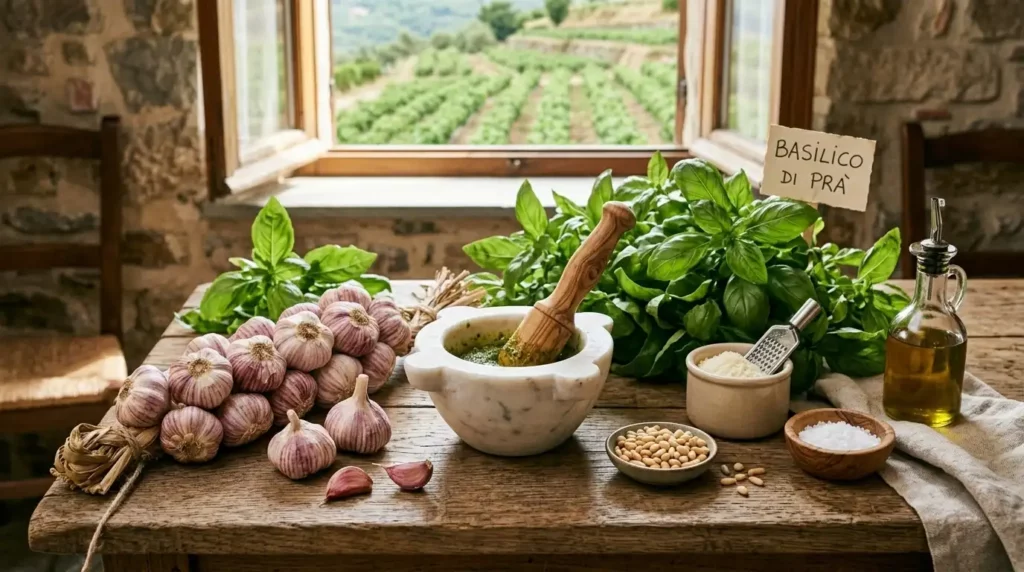
Prà basil is considered the most authentic reference for Genoese pesto, not only for its aromatic qualities but also for its strong connection to the territory it comes from. Prà is a district in western Genoa, located between Pegli and Voltri, historically associated with basil cultivation and today regarded as one of the symbolic places of this tradition.

The characteristics of Prà basil make it particularly suitable for pesto: the leaves are small and tender, the aroma is intense yet delicate, and the flavor is more balanced and less aggressive compared to other varieties. This aromatic finesse allows for a more harmonious pesto, where basil remains the protagonist without overpowering the other ingredients.

Over time, the name Prà has become almost inseparable from Genoese pesto. More than just a place of origin, it represents an essential part of the sauce’s identity, evoking an agricultural and gastronomic tradition deeply rooted in Ligurian culture.


9. Difference between mortar pesto and blended pesto

Genoese pesto can be prepared in two main ways: using a traditional mortar or a blender. Although the ingredients are the same, the final result differs noticeably.

Mortar pesto

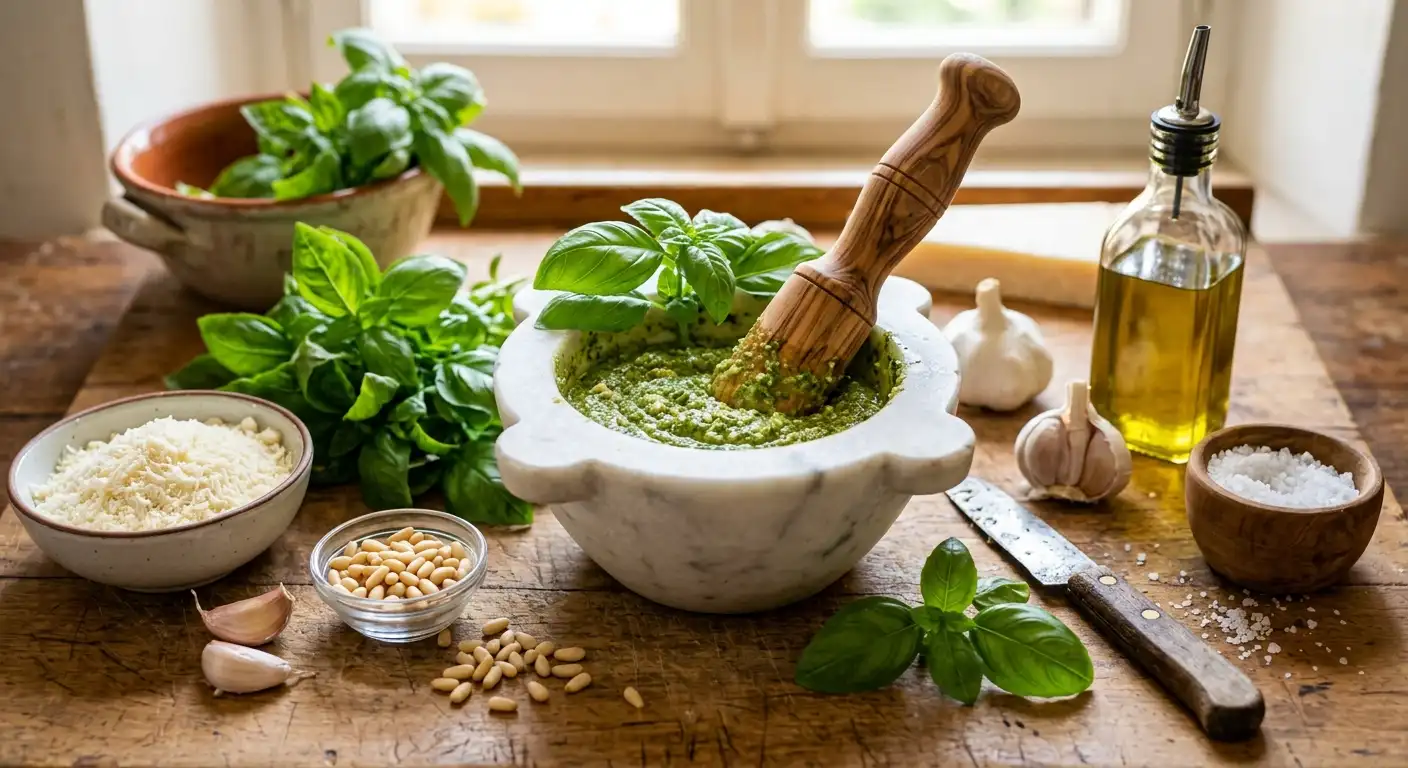
The traditional method involves manual preparation using a mortar and pestle. Basil is gently crushed together with garlic, pine nuts, salt, Parmesan, Pecorino, and extra virgin olive oil.

The result is a pesto:

  • more aromatic
  • creamy in texture but not perfectly smooth
  • with a more balanced and fragrant flavor

The slow processing prevents overheating the basil leaves, preserving their bright green color and essential oils.

Blended pesto

A blender, on the other hand, chops the ingredients quickly using sharp blades. It is a faster and more convenient method, but it generates heat during processing.

The result is a pesto:

  • smoother and more uniform
  • often slightly more bitter
  • with a color that tends to become darker green more easily

The heat from the blades can affect the aroma of the basil and slightly alter the final taste.

Which is better?

From a traditional perspective, mortar pesto is considered superior in quality and authenticity. However, blended pesto remains a practical and valid alternative when time is limited.

The choice therefore depends on the balance between tradition and convenience.


Ricetta originale del pesto genovese DOP secondo il Consorzio con il mortaio

10. Original Genoese Pesto DOP recipe according to the Consortium

Official ingredients (serves 4)

  • 50 g Genoese basil DOP (young leaves)
  • 15 g Italian pine nuts
  • 1 clove of garlic
  • 70 g Parmigiano Reggiano DOP
  • 30 g Fiore Sardo Pecorino DOP
  • 100 ml Ligurian extra virgin olive oil
  • Coarse salt, to taste

Traditional preparation (mortar method)

  1. Place the garlic in a mortar with a pinch of coarse salt and crush it into a cream.
  2. Add the pine nuts and gently pound until you obtain a smooth mixture.
  3. Add the Genoese basil leaves little by little, pressing with a rotating motion (do not chop).
  4. When the mixture is green and fragrant, add the grated cheeses.
  5. Pour in the extra virgin olive oil in a thin stream until you obtain a creamy sauce.

The result should be a bright green cream, never overheated and never oxidized.


8 articoli

Bronze-Die Pasta: Why It’s Better and How to Recognize Quality Fresh Pasta

Bronze-Die Pasta: Why It’s Better and How to Recognize Quality

What are pine nuts? Types, origin, size grading and price per kg | Complete guide to quality and market Genoese pesto

What are pine nuts? Types, origin, size grading and price per kg | Complete guide to quality and market

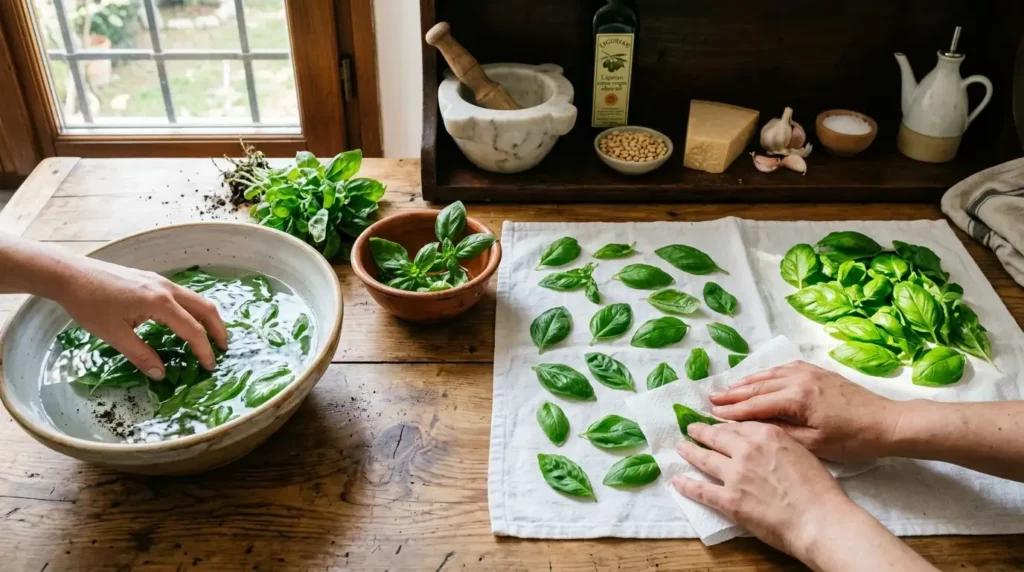
How to wash basil without damaging its essential oils Genoese pesto

How to wash basil without damaging its essential oils

Liguria is Italy’s longest-living region: could it be thanks to the pesto? Genoese pesto

Liguria is Italy’s longest-living region: could it be thanks to the pesto?

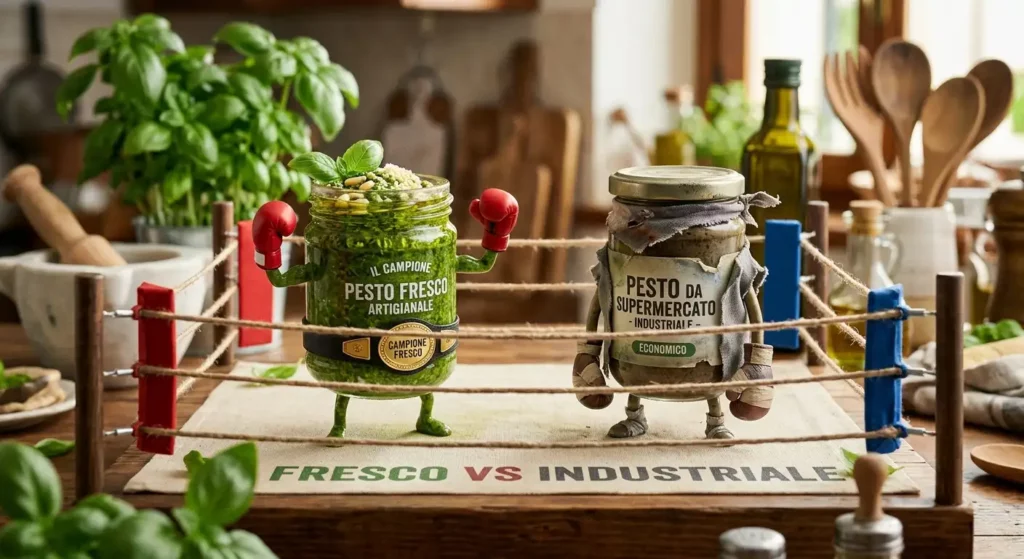
Difference Between Fresh Pesto and Industrial Pesto: Complete Guide Genoese pesto

Difference Between Fresh Pesto and Industrial Pesto: Complete Guide

How to Store Fresh Pesto: Complete Guide to Keeping It Green and Flavorful Longer Genoese pesto

How to Store Fresh Pesto: Complete Guide to Keeping It Green and Flavorful Longer

Why does pesto become bitter? Genoese pesto

Why does pesto become bitter?

Why does pesto darken or turn black? Discover the causes, oxidation, and how to keep pesto green and fresh for longer. Genoese pesto

Why does pesto darken or turn black? Discover the causes, oxidation, and how to keep pesto green and fresh for longer.