

FRESH PASTAGENOESE PESTOMAIN COURSES
Trofie with pesto, potatoes and green beans
recipe by
 Maurizio Pigliacampi
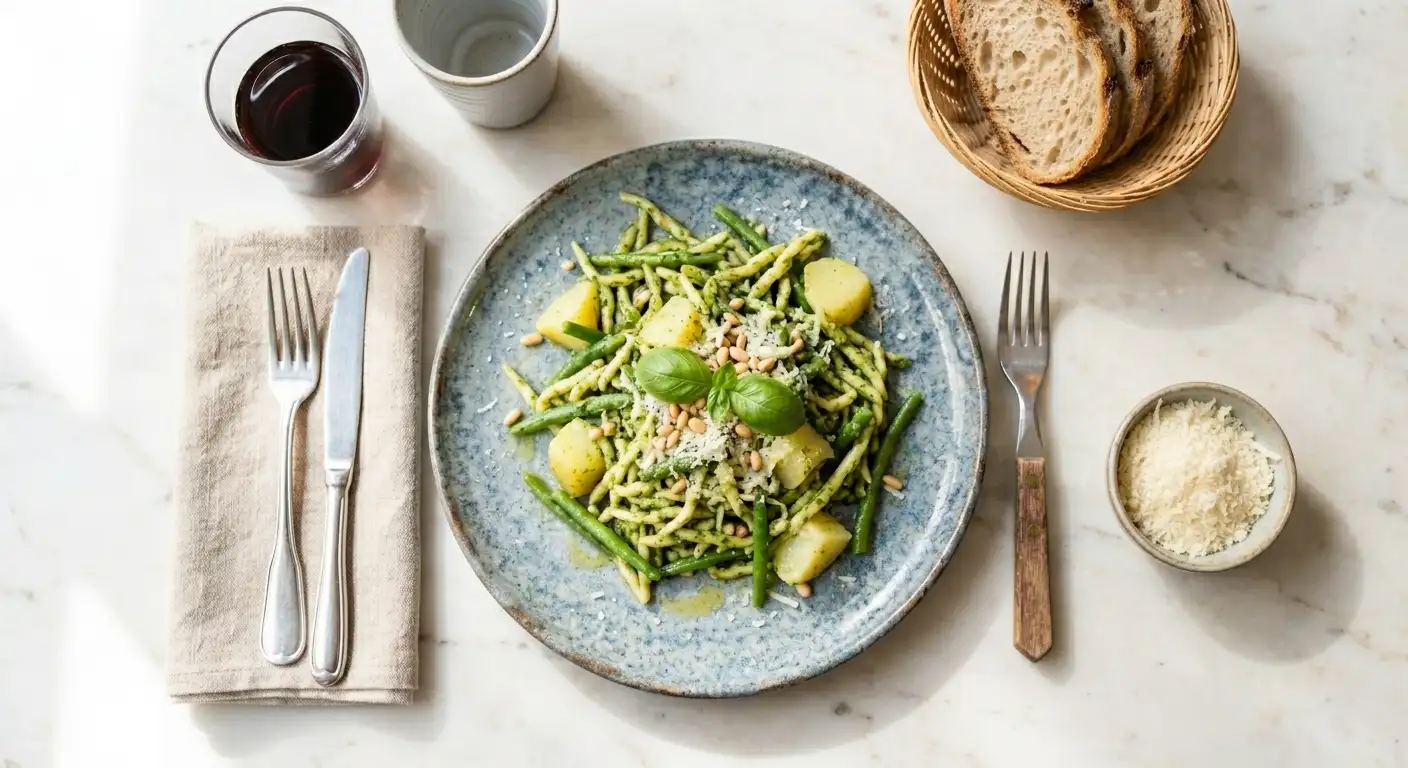
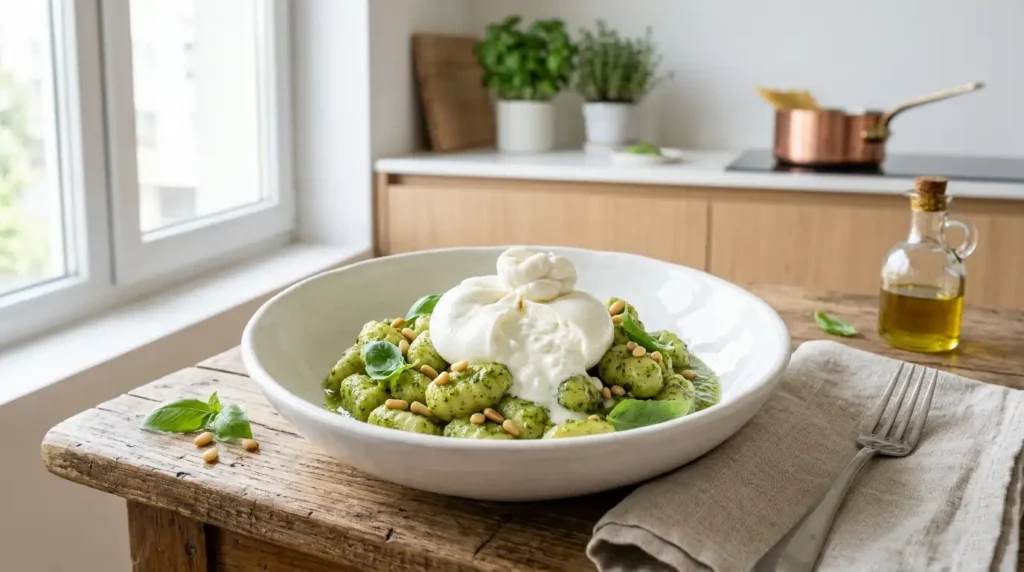
Trofie with pesto is one of the most representative dishes of Genoese culinary tradition. It is a fresh pasta made of small, irregular twisted shapes, dressed with Genoese pesto and often completed with potatoes and green beans in its most classic version.
The variant with potatoes and green beans in Liguria is called “trofie al pesto avvantaggiate.” The term “avvantaggiate” is not accidental: it refers to a more complete and substantial preparation made richer by the addition of vegetables, which in the past also served to make the dish more “advantageous” from both a nutritional and economic point of view. With a single dish, a more filling meal was obtained, capable of satisfying more without increasing the amount of pasta. Today, this version is considered the most widespread and complete form of the traditional recipe, where potatoes and green beans are not a side dish, but an integral part of the dish’s balance: the potatoes add creaminess, while the green beans contribute a vegetal note and a fresher texture.
In Genoa, this dish is not perceived as a “typical recipe” in the tourist sense, but as an everyday element of home cooking and trattoria cuisine. It is part of the local identity, on par with bread or olive oil, rather than a celebratory preparation.
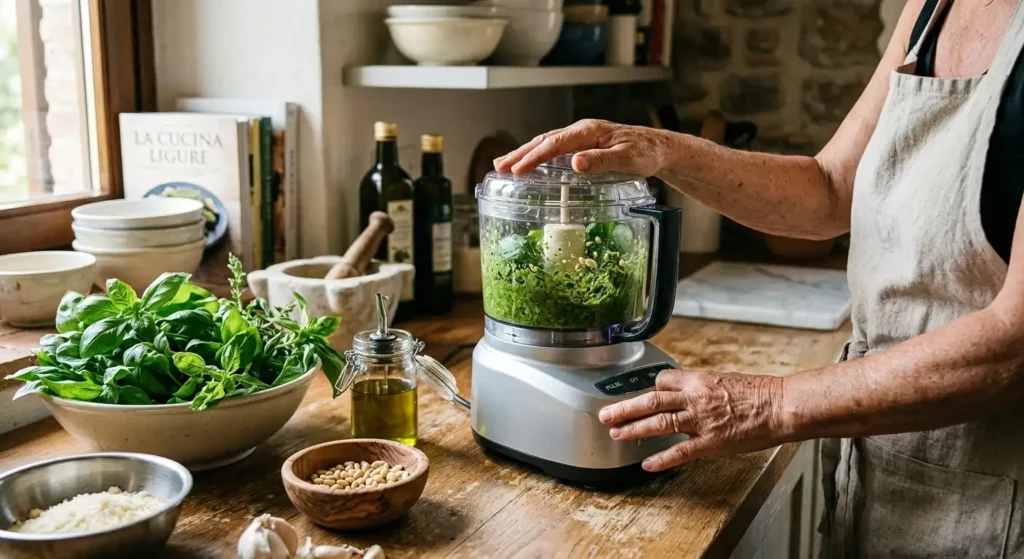
The name “trofie” most likely derives from the Ligurian dialect word strufuggiâ, which refers to the motion of rubbing or rolling pasta by hand on a surface. This manual technique produces the characteristic twisted shape, irregular but functional, designed to hold the sauce. The connection with Genoa is also direct through Genoese pesto, which was born in this area and is made with local ingredients such as basil, Ligurian extra virgin olive oil, pine nuts, and cheeses. The pairing between trofie and pesto is not accidental: the pasta’s surface and the sauce’s texture complement each other, creating a natural balance between structure and creaminess.
ingredients
doses for
Adjust the servings: the quantities are updated automatically.
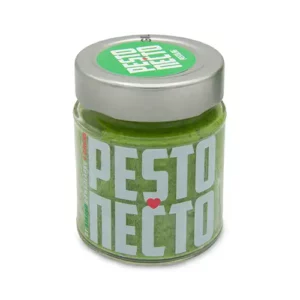
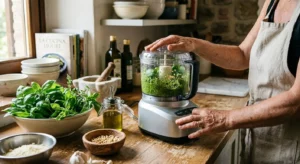
Fresh Genoese Pesto
300 gr
Details
The Real Fresh Genovese Pesto Now Also in Sofia 🇧🇬Savor the authentic taste of Genoa with our fresh Genovese pesto, imported directly from Italy. Made with fresh Genovese basil, Grana Padano DOP, Pecorino Romano, Italian pine nuts, garlic, and extra…
Read More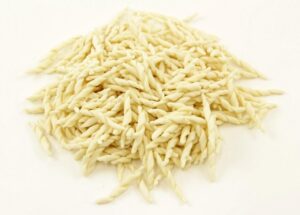
Fresh trofie
400 gr
Details
Fresh Genoese trofie are one of the most recognizable symbols of Ligurian tradition: a short pasta shape, hand-rolled, born in a humble yet ingenious kitchen where just a few ingredients were enough to create unforgettable flavors. Their irregular shape is…
Read More
Potatoes
200 gr
Green Beans
150 gr
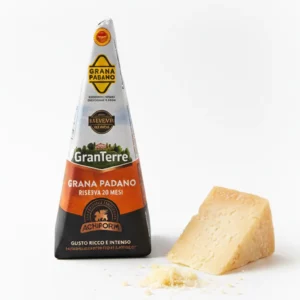
Grana Padano
qb
Details
Grana Padano DOP is an Italian hard cheese with cooked curd and slow aging, produced exclusively from raw cow’s milk, partially skimmed. It is one of the most widely sold and exported gastronomic products of Made in Italy worldwide. Main…
Read MoreUseful insights
preparation
-
1
Ingredient preparation
Potatoes
Peel the potatoes
Cut them into small, regular cubes (about 1–1.5 cm)
They must cook together with the pasta without falling apartGreen beans
Wash and trim the ends
Cut them in half (or leave them whole if very thin)
They should remain green and slightly crunchy -
2
Cooking (correct order)
1 - Bring salted water to a boil (10 g of coarse salt per liter of water. For 4 portions of pasta, use about 3.5–4 liters of water)
2 - Add the potatoes first
3 - After 5–6 minutes, add the green beans
4 - After another 2–3 minutes, add the trofie (for fresh trofie, cooking time is usually 4–6 minutes)Cook everything together until al dente.
-
3
Draining
1 - Drain everything together in a colander
2 - Keep a little of the cooking water aside in a glass
3 - Never rinse the pasta! -
4
Finishing and tossing the pasta
1 - Place the pasta together with the potatoes and green beans in a bowl
2 - Add the fresh Genoese pesto
3 - Mix gently
4 - Add a little cooking water if needed to make everything creamy and glossyThe pesto must never be cooked, it should only bind with the pasta.
-
5
Plating and finishing
1 - Serve immediately
2 - Add a light drizzle of extra virgin olive oil to each plateOptional: a light sprinkle of Grana Padano, and a few fresh Genoese basil leaves.
Buon appetito :)
-
6
Mistakes to Avoid
Do not heat the pesto in a pan — it will turn dark and lose its fresh appearance.
Potatoes too large or overcooked.
Soft green beans — they should add a slight crunch to the dish.Overcooked pasta is a serious mistake.
Overcooked pasta is a major error because it completely breaks the structure of the dish.When it goes past the proper cooking point:
1 - It loses texture and becomes soft
2 - It cannot properly hold the pesto “mantecatura”
3 - It releases too much starch, making the result sticky
4 - It blends into a flat, textureless massIn trofie al pesto, the damage is even more evident: the pasta must have elasticity to hold the sauce in its twists. If overcooked, the pesto does not distribute properly and instead becomes a heavy, uniform mixture.
In short: overcooked pasta is not just a technical mistake — it changes the balance of the dish and removes its identity.
Follow us to be first to know when our new shop opens and our new services launch!
Follow us
Recipes, news and behind the scenes every day.