

 Maurizio Pigliacampi
How to wash basil without damaging its essential oils
Basil is the soul of true Genoese pesto. Its intense aroma, bright green color, and essential oils contained in the leaves are key to achieving an excellent result. However, many people underestimate an important step: washing the basil.
Proper washing removes dirt, soil, and dust without affecting the taste and aroma of the leaves. Here is how to do it correctly.
Why it is important to wash basil
Even the freshest basil can contain traces of soil, small insects, or residues from cultivation and transport. Good hygiene not only ensures cleanliness but also improves the final quality of the pesto.
However, it is essential to avoid overly aggressive handling, which can damage the leaves and accelerate oxidation.
How to wash basil step by step
1. Select the best leaves
Before washing, remove any yellowed, damaged, or spotted leaves. For pesto, it is best to use young, tender, and evenly green leaves.
2. Gently soak in cold water
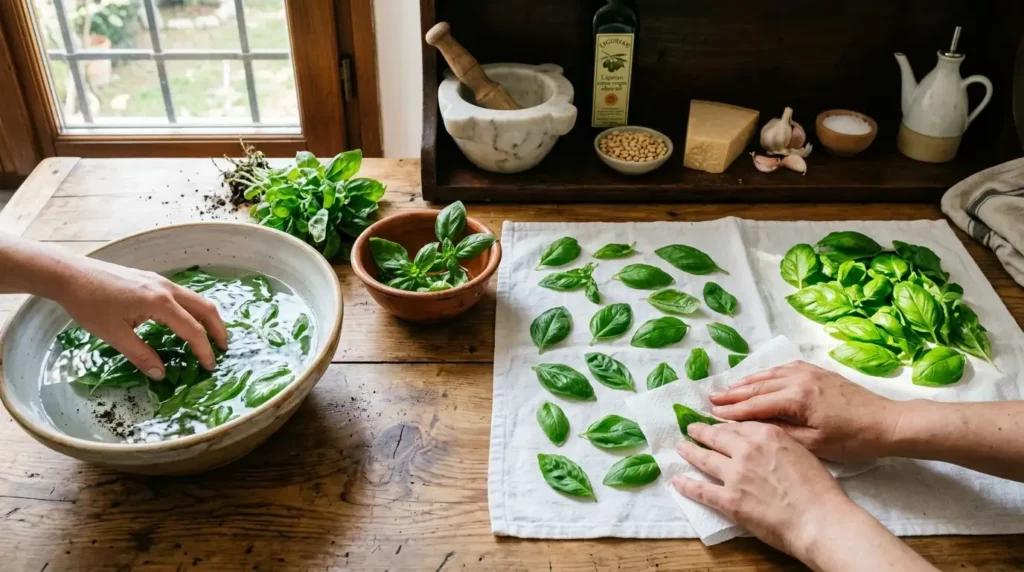
Fill a bowl with cold water and gently immerse the basil leaves. Move them lightly with your hands so that dirt settles at the bottom.
Avoid rubbing or squeezing the leaves, as they can easily darken.
3. Repeat rinsing if necessary
If the water becomes dirty, replace it and repeat the process until it stays clean.
4. Dry the basil thoroughly
Drying is a crucial step. Remaining water can alter the texture of the pesto and speed up oxidation.
Spread the leaves on a clean cloth or use a salad spinner. Then gently pat them dry with paper towels until completely dry.
The most common mistake
Many people leave basil soaking in water for too long. This leads to loss of aroma and more fragile leaves.
Washing should be quick and gentle, followed by proper drying.
Genoa’s advice
For a bright green and aromatic pesto, use basil immediately after washing and drying. If possible, chill the leaves for a few minutes before processing and always work at low temperatures.
Properly handled basil preserves its essential oils and delivers a fresh, unmistakable flavor.
Conclusion
Washing basil correctly takes only a few minutes but has a major impact on the final result. Cold water, gentle movements, and perfect drying are the keys to a fragrant and fresh pesto.
Useful insights