

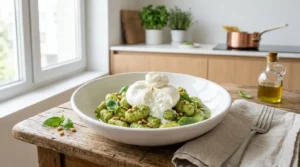
How to make potato gnocchi. The traditional recipe.
recipe by
 Maurizio Pigliacampi
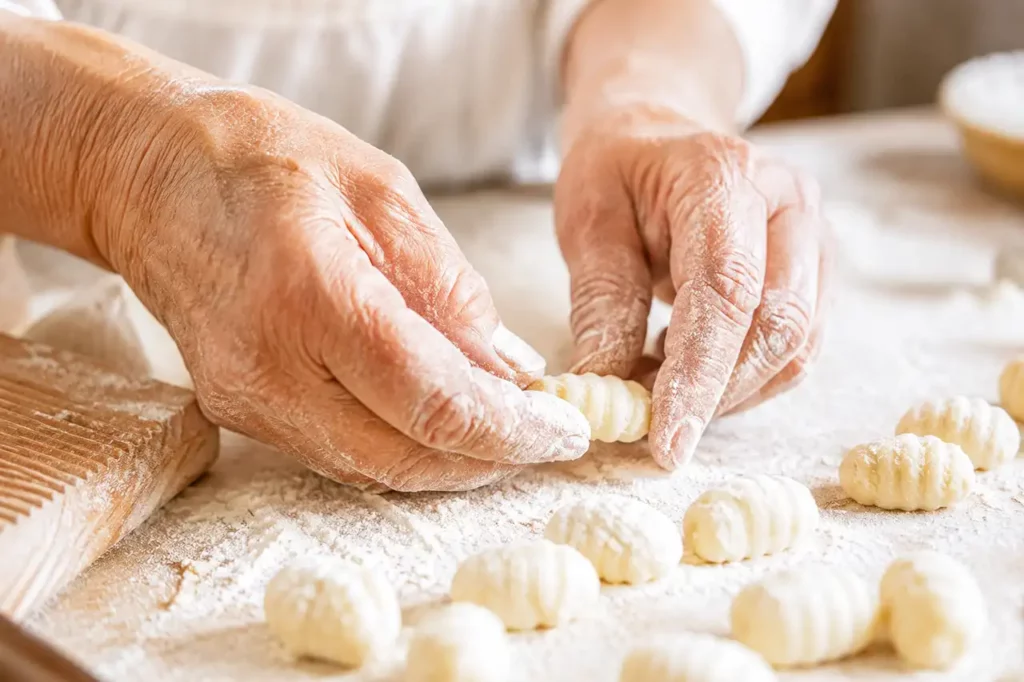
There is a memory that always comes back the same way, as if time had stopped inside it. In the morning, just after waking up, I would walk into the kitchen and find my grandmother already at work. The air was full of flour, the table completely covered, and she had that cloth on her head to keep her hair tied back while she kept kneading without ever stopping.
Her hands moved quickly, but without real haste, with a steady, almost stubborn calm. On the table there were hundreds of gnocchi already made, lined up one next to another, waiting to go into the water.
I would just stand there watching, knowing that soon I would eat them: her gnocchi, soft and honest, with pesto or with the meat sauce she liked to prepare. It was a simple moment, but it had something absolute about it, the kind that stays with you without needing any explanation.
Potato gnocchi, in the home version, don’t need tricks or special tools: just hands, patience, and well-chosen potatoes. The dough is worked as little as possible, just enough to turn a few ingredients into a soft but compact mixture, never overworking it to avoid making them tough.
Then they are shaped by hand, one by one, with that simple gesture that belongs to the most authentic tradition: slightly imperfect, all different, but precisely for that reason perfect. The secret is not precision, but the right balance between lightness and substance. The kind that only family recipes can teach.
ingredients
doses for
Adjust the servings: the quantities are updated automatically.
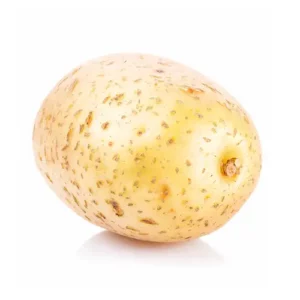
Potatoes
1.5 kg
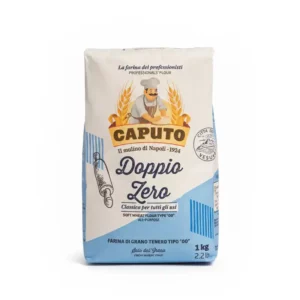
Caputo Flour 00
375 gr
Details
Caputo Tipo “00” flour is one of the most highly valued flours among professional pizza makers and bakers, as it guarantees a stable, elastic dough that is easy to work with. Its high quality comes from carefully selected wheat varieties…
Read MoreUseful insights
preparation
-
1
La cottura e la preparazione delle patate
Cooking and preparing the potatoes
Take the potatoes and boil them in a large pot with plenty of water and salt. Once cooked (when they are soft when pierced with a fork), drain them while still hot, peel them carefully, and pass them through a food mill or potato ricer.
💡 The Secret to Perfect Potatoes
The golden rule: Cook the potatoes whole and with the skin on, starting from cold water. This prevents them from breaking apart and absorbing too much water (the number one enemy of the dough).
Quantities (for 1 kg of potatoes): Cover them completely with about 2 liters of water (the water should be 2–3 cm above them) and add 1 level tablespoon of coarse salt (about 15–20 g).
Cooking time: Count 30–40 minutes from when the water starts boiling. They are ready when a fork slides into the center without resistance. -
2
The dough
Mash the potatoes while they are still hot over this light layer, then start incorporating them. Gradually add the remaining flour, a little at a time and only if necessary, while working the dough without water. Keep working quickly with your hands until you obtain a smooth and compact dough.
💡 Grandmother’s advice: remember that the less flour you use, the better; the dough should remain soft and not artificially “weighed down,” so the gnocchi will keep a light and delicate texture when cooked.
-
3
Shaping the dough sticks
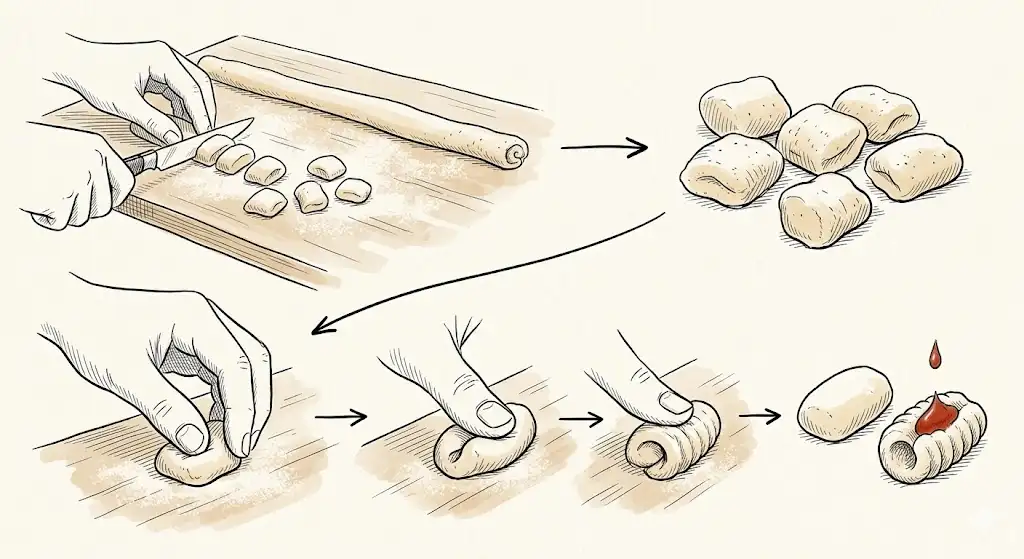
Break off small portions from the main dough. Roll each piece under the palms of your hands on the work surface, until you form long ropes that should roughly take the shape of small sticks.
-
4
Cutting and the traditional touch (the indentation)
From these dough sticks, cut small pieces with a knife, each about the size and shape of a small walnut.
To give them the traditional shape: take each piece and press it lightly with your fingertip, dragging it firmly across the work surface. This movement will make the gnocco roll onto itself, giving it the classic “chip-like” shape (with a small indentation, perfect for holding the sauce).
-
5
Cooking
Bring a large pot of salted water to a boil and drop in the gnocchi. Let them cook for just a few minutes: as soon as they float to the surface, gently lift them out using a slotted spoon.
How to cook gnocchi
The boil: Bring plenty of salted water to a boil (use the same ratio as for pasta, about 10 g of salt per liter).
Cooking: Drop the gnocchi in a few at a time to avoid lowering the water temperature. Do not stir immediately, or you risk breaking them.
The secret: As soon as they float (about 2–3 minutes), let them sit on the surface for another 10 seconds, then remove them gently with a slotted spoon. Do not use a colander, or you may crush them. -
6
Serving and seasoning
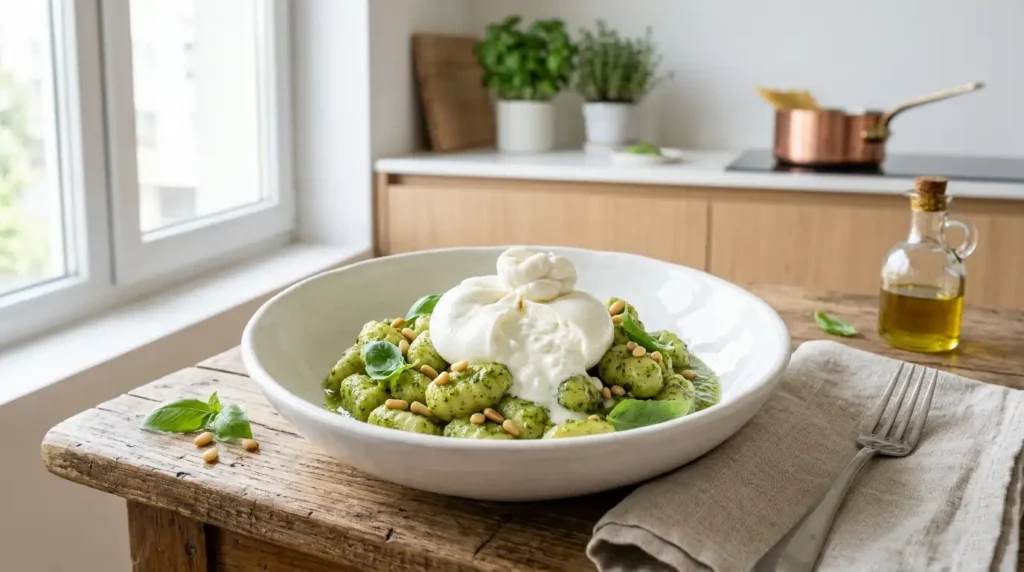
Let the gnocchi drain well from any remaining cooking water and place them in a large serving dish. At this point, they are ready to be seasoned as you like. Tradition suggests three wonderful options:
With Genovese pesto;
With a rich meat sauce and a sprinkle of Parmesan cheese;
Plain, even just with melted butter (and optionally a few sage leaves).
Follow us to be first to know when our new shop opens and our new services launch!
Follow us

Recipes, news and behind the scenes every day.