



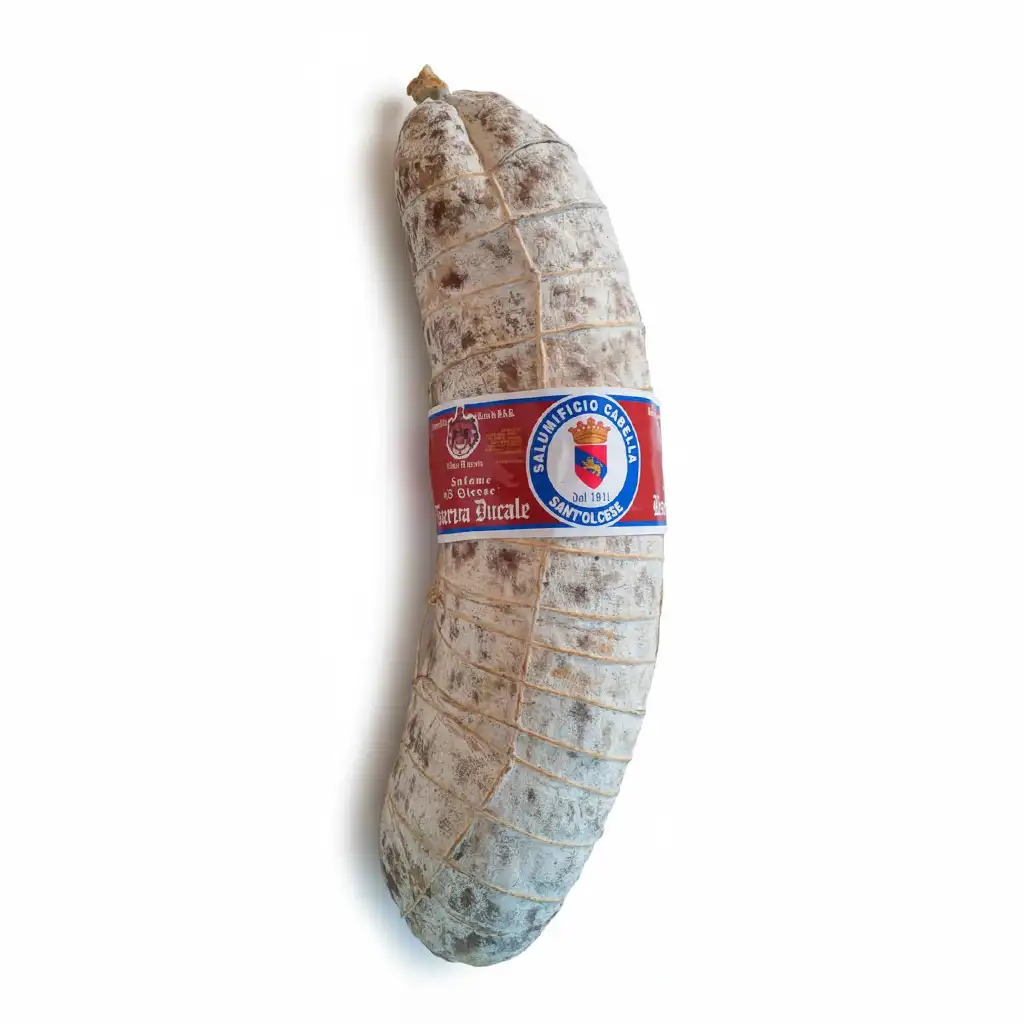
Sant’Olcese Salami®
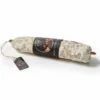
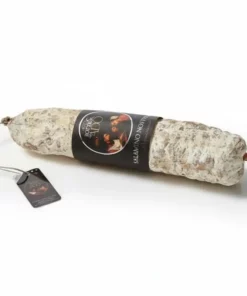
It is one of the most typical products of Liguria, still made today following the traditional recipe: half beef and half pork, with characteristic cubes of lard. The salami is dried over a wood fire and then aged in the ancient cellars of the Cabella family.
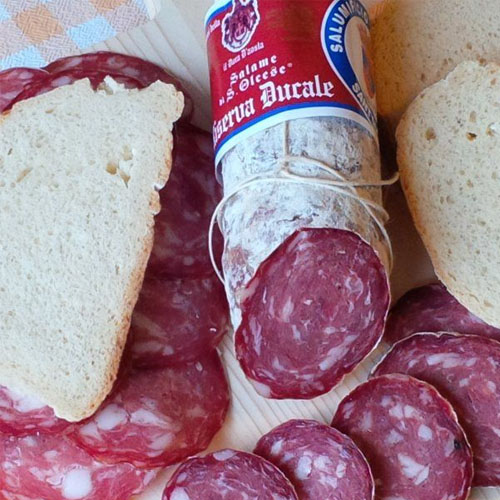
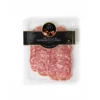
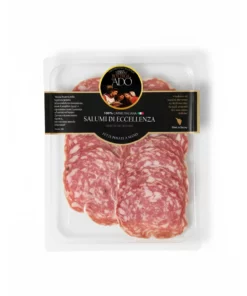
When sliced, Sant’Olcese Salami® reveals a fragrant aroma and a delicate flavor enhanced by a light hint of garlic.
History of Sant’Olcese Salami®
There are no certainties regarding the historical origins of Sant’Olcese Salami®, but it undoubtedly dates back before the 19th century.
Tracing the genealogy of the Cabella family, one easily crosses the threshold of 1800, entering the industrial era.
It was during that century that Sant’Olcese Salami® conquered the Genoese market — evolving from a local product of the Polcevera Valley to a beloved staple of Genoese cuisine.
By the early 1900s, the Cabella Salumificio was already expanding beyond the nearby valleys (Valle Scrivia, Val Bisagno, Valle Stura, and Valle Polcevera itself), reaching also the lower Piedmont areas that supplied excellent beef to local producers.
Production of Sant’Olcese Salami®
What most distinguishes this product is its unique blend of pork and beef, making it unlike any other cured meat.
The beef comes from adult animals raised in Piedmont, particularly in the Asti, Alessandria, and Cuneo areas.
All the cattle slaughtered in Sant’Olcese belong to the “Bianca Piemontese” and “Brunalpina” breeds, meaning the meat originates exclusively from Liguria and the entire northwest of Italy.
The pork parts, providing the fatty component of the mixture, come from both Piedmont and Emilia-Romagna, consisting mainly of lard and pancetta.
Although production methods have evolved with modern technology, the flavor and characteristics of the salami remain unchanged. What was once stuffed by hand is now assisted by machines—yet the process still employs around twenty skilled workers.
Hand-Tying of Sant’Olcese Salami
The oldest artisanal practice preserved in the production process is hand-tying, which requires great skill and craftsmanship from the specialized staff.
Drying of Sant’Olcese Salami
During the drying stage, the salami is still exposed to a wood fire, which gives it its subtle smoky flavor.
Among its natural seasonings, we also find garlic and white wine from the Polcevera Valley, another renowned local product.
Reviews
There are no reviews yet.