 Fresh Pasta
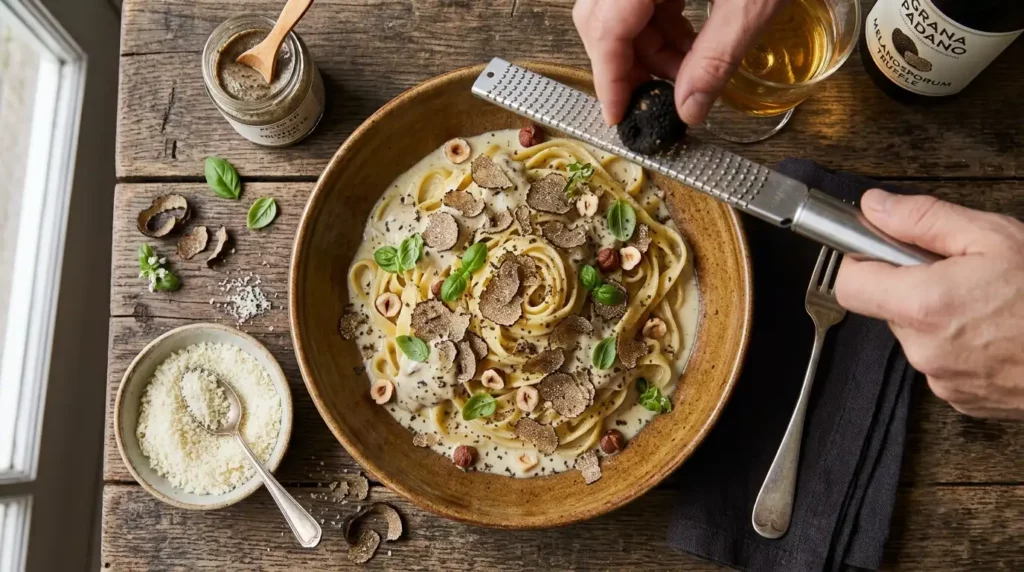
Tagliatelle with Truffle, Grana Padano Fondue, and Hazelnuts
226 views



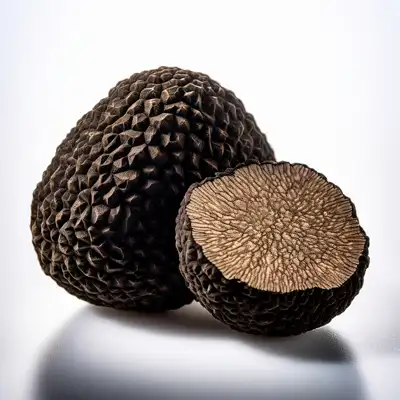
The prestigious black truffle (Tuber melanosporum) is a hypogeous fungal species that grows in mycorrhizal symbiosis with the roots of oak, holm oak, and hazelnut trees. It develops in well-drained limestone soils, poor in organic matter, with a tendency toward alkaline pH. Fruiting occurs underground between winter and early spring.
The edible part is the inner tissue (gleba), which is black-brown in color with fine, branched whitish veins responsible for its aromatic profile. The aroma is due to a mixture of volatile compounds (mainly sulfur-based organic compounds), with notes of undergrowth, bitter cocoa, damp earth, and mature mushroom. The product is sensitive to oxidation, dehydration, and enzymatic degradation, therefore requiring short storage at 2–4°C wrapped in absorbent paper.
The outer surface is covered with warts—hard and irregular pyramidal structures typical of the species. In fresh specimens, these warts are well-defined, compact, firmly attached, and sharply profiled; as the truffle ages, they become rounded, flattened, or partially eroded, often indicating improper handling or loss of freshness.
In culinary use, black truffle is mainly consumed raw or with residual heat, as its aromatic compounds are fat-soluble and partially heat-sensitive. It pairs with fatty foods that carry its aroma: eggs, butter, cream, aged cheeses, risotto, as well as white or red meats. Its aromatic intensity increases when finely shaved just before serving.
From a commercial perspective, the main production areas in Europe are:
The most important European wholesale and restaurant markets are:
Commercial selection is based on firmness (must be solid and compact), specific weight (freshness indicator), aroma intensity (clean, without ammonia notes), and integrity of the warty surface. Internally, the gleba should be well marbled with veins rather than uniform or greyish.
Prices vary depending on season, size, and quality: on average €400–800/kg, €800–1500/kg for selected grades, with top lots exceeding €2000/kg in the best years.