

 Maurizio Pigliacampi
 Genoese pesto
Why does pesto darken or turn black? Discover the causes, oxidation, and how to keep pesto green and fresh for longer.
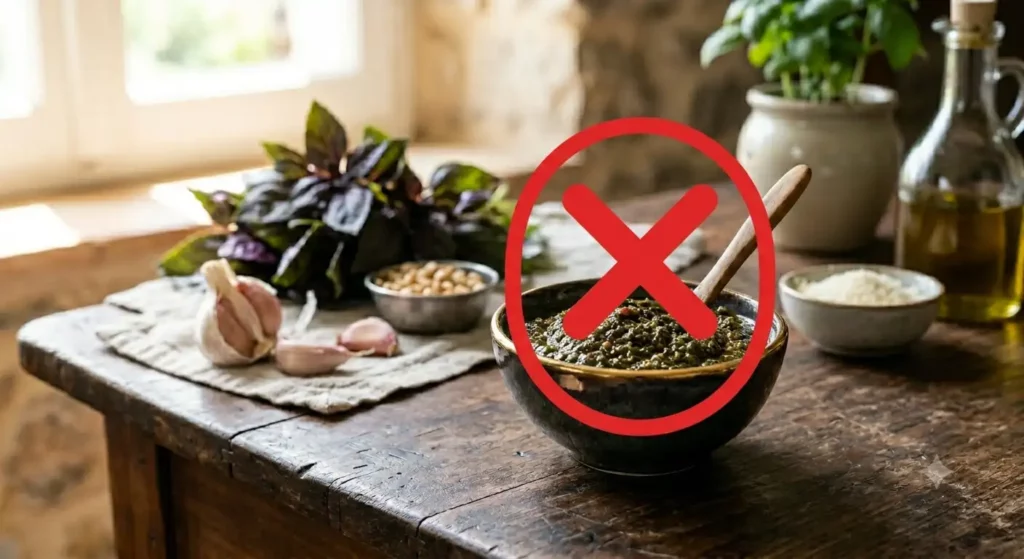
Why does pesto darken or turn black? Discover the causes, oxidation, and how to keep pesto green and fresh for longer.
Pesto Genovese is one of Italy’s most beloved culinary treasures worldwide, but also one of the most delicate. How many times has it happened that you prepare a fragrant and fresh pesto, only to see it darken after a few hours or, even worse, turn almost black when it comes into contact with hot pasta?
Understanding why pesto turns black or dark is not just an aesthetic issue: the color change is often a sign of altered organoleptic qualities and a loss of the basil’s typical fresh aroma. In this article, we will look at the chemical processes behind this phenomenon and give you practical advice on how to keep pesto always bright green.
The science behind the color: oxidation
The main reason pesto darkens is oxidation. Basil contains enzymes called polyphenol oxidases. When the leaves are chopped or crushed, the cell walls break down and these enzymes are exposed to oxygen in the air.
This process converts phenolic compounds in basil into quinones, which then polymerize and form dark pigments (melanins). Simply put: the more basil is exposed to oxygen and mechanical stress, the faster it darkens.
Why does pesto darken after cooking?
Many people think the main cause is the heat of the pasta, but the truth is more complex. The heat from freshly cooked pasta acts as an accelerator of already started oxidation processes.
The effect of heat: High temperatures further break down chlorophyll and accelerate enzymatic activity, making darkening almost immediate
Contact with metals: If you use a blender with steel blades that heat up during use, you create a double stress for the basil: mechanical oxidation and heat. That is why the traditional marble mortar, which does not heat the ingredients, is still the best choice
The moment of truth: how to add pesto to pasta without “burning” it
Even if you have made perfect pesto, you can ruin it at the moment of mixing it with pasta. A common mistake is adding it to a pan on the stove or directly into very hot pasta in the pot. This is the fastest way to turn the green color brown in seconds.
Here is how to do it:
Never heat pesto: It should not be cooked or fried
Drain and transfer: Once the pasta is ready, drain it while saving a little of the cooking water and place it in a bowl at room temperature, not in the hot pot
Use pasta water: Dilute the pesto with a little pasta cooking water to create a creamy mixture that combines more easily and slightly lowers the temperature
Final step off the heat: Add the pesto only after removing everything from the stove
Serve immediately: Do not let it sit on hot pasta
How to avoid darkening: chefs’ secrets
To keep pesto a bright emerald green:
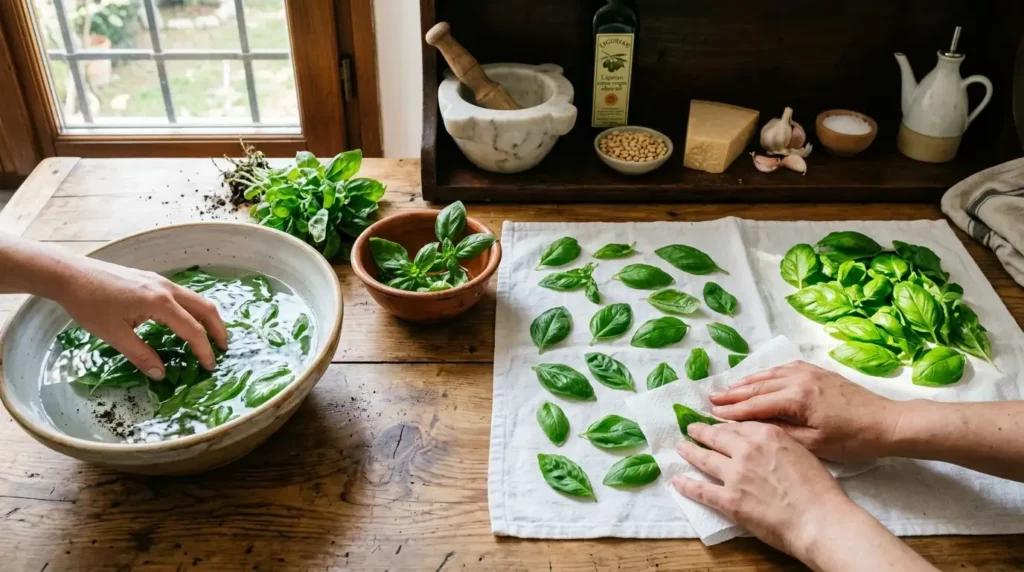
Dry basil: Wash carefully and dry completely
Cold tools: Chill the blender and blades before use
Short processing: Blend in short pulses without overheating
Olive oil immediately: Add olive oil early to create a protective layer against oxygen
Ice: A small ice cube can help keep the temperature low
Conclusion
Darkened pesto does not always mean it has gone bad, but it does indicate a loss of freshness and aroma. With proper temperature control, quick processing, and correct mixing, you can preserve that intense green color that makes pesto so appetizing.
Next time remember: cold, fast, and without unnecessary heat are your best allies.