


 Fresh Pasta
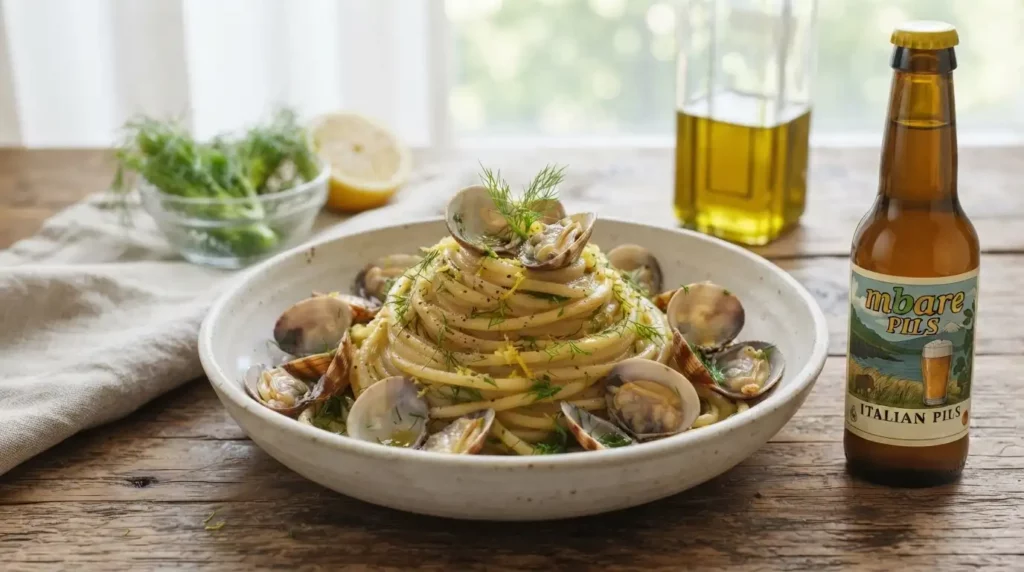
Spaghettoni with beer, Italian True Clams, Lemon, and Wild Fennel
204 views



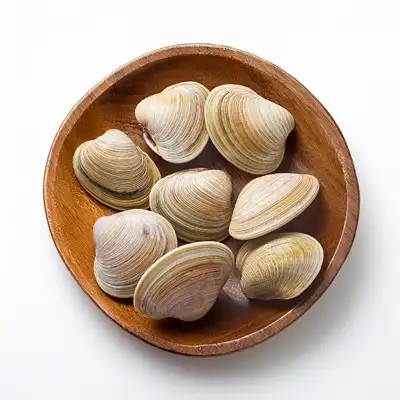
Grooved carpet shells are bivalve mollusks highly valued for their briny yet delicate flavor. They are used mainly in pasta dishes, sautés, and soups. In Italy, the term vongole veraci may refer both to the native species and, very often on the market, to the more widely available farmed Manila clam. This distinction matters because history, origin, flavor, and price can vary considerably depending on the species and the harvesting or farming area.
The native grooved carpet shell is Ruditapes decussatus, a species typical of coastal, lagoon, sandy, or muddy seabeds in the Mediterranean and parts of the eastern Atlantic. Today it is considered rarer.
The clam most commonly found on the market, however, is Ruditapes philippinarum, which is more resilient and well suited to clam farming, to the point that it has largely replaced the native grooved carpet shell in many Italian markets.
From a morphological point of view, the grooved carpet shell has a rather elongated shape and marked outer grooves. Compared with the Manila clam, the most commonly cited distinguishing feature is the siphons: separate in the grooved carpet shell, fused in the Manila clam.
Clams have a long-standing place in Mediterranean and Italian cuisine, where they have become an iconic ingredient in seafood dishes. In Italy, until the more recent development of the modern sector, harvesting was mainly linked to natural beds, whereas the growth of clam farming in the northern Adriatic made the Manila clam much more common and widely available on the market.
In the kitchen, they are used mainly for:
The basic rule is to cook them briefly: they should be opened over high heat and removed as soon as the shells open, so they do not lose their juiciness and aroma.
Fresh clams must be sold alive and vigorous. When choosing them, check especially for these signs:
A good fresh clam also tends to feel heavy for its size, because it is still full of its natural liquid. At home, it should be kept in the refrigerator between 0 and 4 degrees Celsius, covered with a damp cloth, and consumed quickly, ideally within 1–2 days.
Fresh clams generally have a finer aromatic profile, more natural liquid to use in the sauce, and a more pleasant texture, especially in simple dishes where the clam is the main feature.
Frozen clams, often already shelled, are practical and more consistent for operational use, but they usually lose part of their marine fragrance and the texture of a freshly opened clam.
For a restaurant or for home cooking, the difference is this:
In Italy, the grooved carpet shell is associated mainly with clam farming in the northern and central Adriatic. The Po Delta and the Venetian lagoons are considered key areas in terms of production volume, supply-chain organization, and long-standing tradition.
If we talk about the most appreciated areas on the Italian market, the most frequently cited and recognizable are:
However, saying which are the “best” depends on what you are looking for. The native Ruditapes decussatus is generally regarded as rarer and more prized, making it suitable for a premium offering. A well-farmed Manila clam, especially from suitable Adriatic areas, remains the more realistic choice in terms of quality, availability, and consistency.