





 Maurizio Pigliacampi
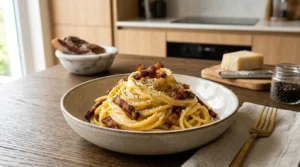
Bronze-Die Pasta: Why It’s Better and How to Recognize Quality
When we sit down at the table for a plate of pasta, we often take it for granted that it is just flour and water. In reality, pasta is a masterpiece of food engineering and tradition. But have you ever wondered why that “restaurant-quality” pasta is so different from what we often find in our kitchen cupboards? The secret lies in two key factors: the production method and the raw material. Let’s discover together why bronze-die extrusion (trafilatura al bronzo) still represents the “gold standard” of Italian excellence.
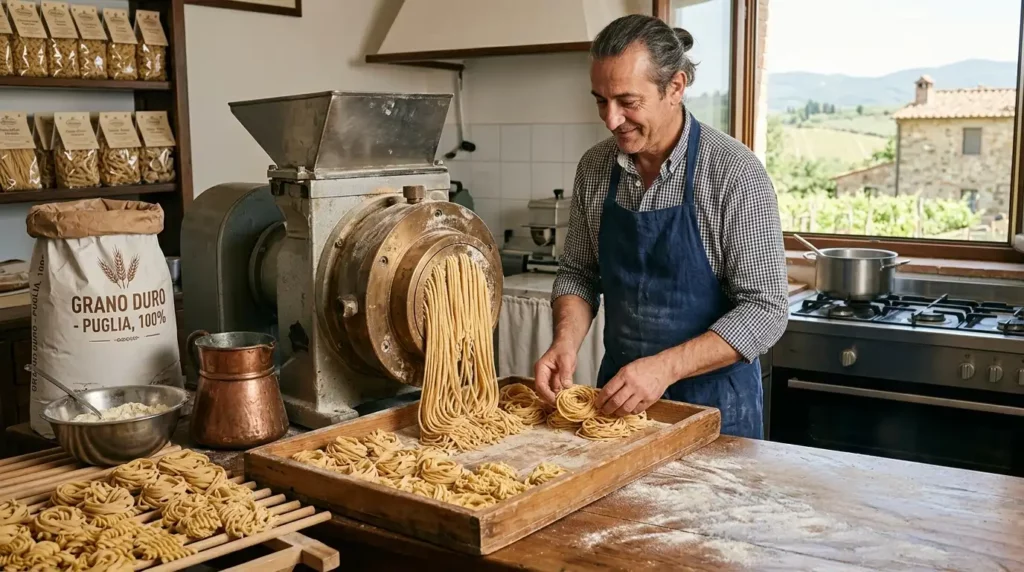
History of Pasta: A Millennial Heritage The history of pasta in Italy is a narrative that intertwines culture and ingenuity. Although its origins are debated, it was in Southern Italy, between the 13th and 14th centuries, that dry pasta became a pillar of nutrition thanks to its ability to be stored for long periods. The crucial turning point came with the invention of the bronze-die press. Initially, pasta was an artisanal product, handmade. With industrialization, the use of bronze molds spread, allowing complex shapes to be given to the pasta, maintaining that roughness that made it perfect for holding sauce.
The Secret of Bronze-Die Extrusion Why is the bronze press better? The difference is all in the surface.
- Bronze Press: The dough is pushed through a bronze mold. This material is porous and “rough,” creating micro-abrasions on the surface of the pasta. The result is a matte, rough, and slightly irregular product.
- Teflon Press (Industrial): Used for mass production, it makes the pasta smooth, shiny, and “plastic.” Instead of penetrating the pasta, the sauce slides off, creating that unpleasant sensation of seasoning separated from the dough.
Why choose it? Pasta made through a bronze mold has a superior ability to absorb sauce, ensuring an explosion of flavor in every bite. Furthermore, the rough surface is an indicator of a slower and more respectful process for the product.
Italian Wheat vs. Foreign Wheat: Let’s Clarify We often read “100% Italian Wheat” on packaging. But what is the real difference?
- Italian Wheat: Durum wheat grown in Italy (especially in the South, such as in Puglia or Sicily) benefits from a Mediterranean climate that often gives excellent flavor and cooking resistance. The short supply chain guarantees freshness and greater control over the quality of the grain.
- Foreign Wheat (e.g., Canada, USA): Many pasta manufacturers use blends of foreign grains, often characterized by high protein content (gluten). This makes the pasta very elastic and difficult to “overcook”—a characteristic highly valued in the industry to facilitate processing.
The verdict: It is not the place of origin that determines absolute quality, but the quality of the grain and its protein content. High-quality pasta requires wheat with a good gluten index, which allows for consistent cooking resistance.
Practical Guide: How to Distinguish “Good” Pasta from “Bad” Pasta At the supermarket, don’t be fooled by attractive packaging. Here is how to recognize high-quality pasta at first glance:
- Color: Be suspicious of pasta that is too yellow or almost fluorescent. Quality pasta has an amber color, tending toward straw yellow, which is more natural.
- Surface: It should appear rough, almost dusty. If the pasta is as shiny as a mirror, it has almost certainly been processed through a Teflon press.
- Cooking Resistance: Good pasta must maintain an “al dente” consistency even after a few extra minutes of cooking. If it becomes mushy or releases too much starch into the water (the cooking water is too white/cloudy), the quality of the raw material is low.
- Label: Always check the drying process. High-quality pasta is dried slowly at low temperatures (below 45–50°C). This process preserves the nutritional properties and the flavor of the wheat, unlike rapid industrial drying, which “cooks” the grain before it even reaches your pot.
In Conclusion Choosing pasta that has passed through a bronze press, is slowly dried, and is produced from quality wheat is not just an act of love for the palate, but a way to support true Italian gastronomic culture. Next time you go shopping, look at the pasta with a critical eye: the difference is right there, in the texture that will embrace your favorite sauce.
Useful insights