


 Maurizio Pigliacampi
 Ancient Recipes
Difference Between Fresh Pesto and Industrial Pesto: Complete Guide
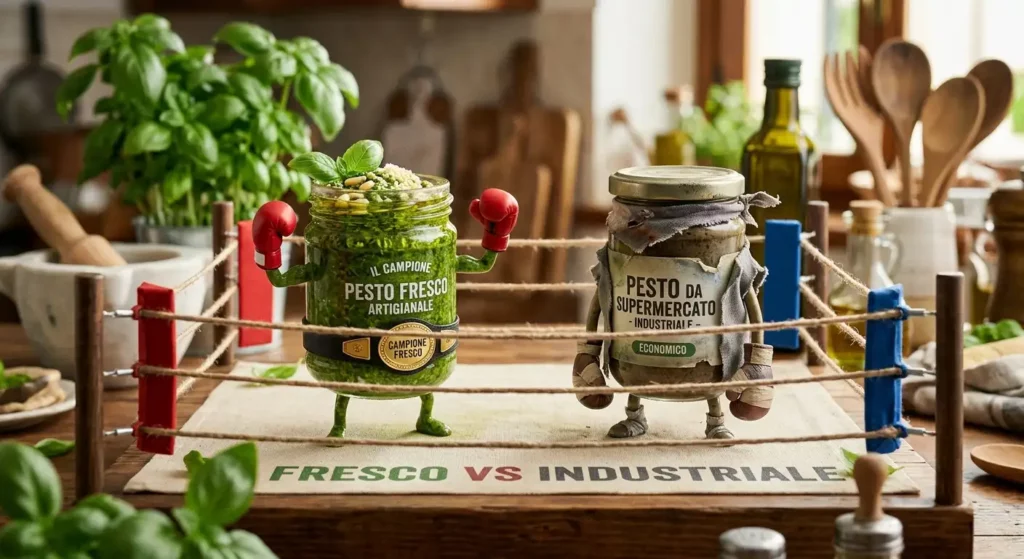
Fresh pesto vs supermarket pesto
The difference between fresh pesto and industrial pesto is much greater than most people think. At first glance they may look similar, but in reality they are two products with completely different characteristics, production processes, and quality.
Understanding these differences is essential for making a conscious choice about what we put on the table.
Ingredients: natural vs standardized
Fresh pesto
Fresh pesto is made with simple and natural ingredients:
- fresh basil
- extra virgin olive oil
- pine nuts
- garlic
- cheese (Grana Padano and Pecorino)
- sea salt
It contains no preservatives and is produced in small batches.
Industrial pesto
Industrial pesto, on the other hand, is designed to last a long time on shelves:
- often uses cheaper oils (not always only extra virgin olive oil)
- may contain cashews instead of pine nuts, walnuts, or peanuts
- includes preservatives or acidity regulators
- may contain artificial flavors or dehydrated basil
Production process
Fresh pesto
- artisanal preparation
- low-temperature processing
- consumed shortly after production
- high attention to basil quality
Industrial pesto
- large-scale production
- heat treatments to extend shelf life
- standardized taste
- long shelf stability
Taste and aroma
Fresh pesto has:
- an intense basil aroma
- a more complex and natural taste
- a less uniform but more authentic texture
Industrial pesto, on the other hand:
- has a flatter, standardized taste
- is designed to be “always the same”
- loses part of its fresh aroma
Color and appearance
- Fresh pesto: bright green, may slightly darken over time due to natural oxidation.
- Industrial pesto: more stable and uniform color thanks to processing and antioxidants.
Storage
- Fresh pesto: lasts a few days in the fridge (up to around 28 days only under controlled conditions and with careful sterilization of containers).
- Industrial pesto: lasts months thanks to preservatives and heat treatments.
Nutritional value
Fresh pesto:
- better preserves basil nutrients
- contains more “natural” fats from olive oil and nuts
Industrial pesto:
- may contain more additives
- often has a less “clean” nutritional profile
Which is better?
There is no single answer, but the difference is clear:
- If you want authenticity, flavor, and quality, fresh pesto is the better choice.
- If you want lower cost at the expense of quality and don’t care about real flavor, industrial pesto is more convenient.
Conclusion
The difference between fresh and industrial pesto is not just about taste, but about the entire production process. One is a living, artisanal, and delicate product; the other is designed for long shelf life and standardization.
Making a conscious choice means knowing what we are really eating.
For this reason, at Pesto.bg we strive every day to bring you authentic fresh Genovese pesto directly from Genoa.