




Prosciutto crudo di Parma PGI 24 months
Prosciutto crudo di Parma PGI: The Mastery of Aging and Its Curing Periods
Prosciutto di Parma PGI is one of the most iconic and highly appreciated Italian cured meats in the world. Renowned for its sweetness and natural origin, it represents the perfect combination of Emilian charcuterie tradition and the unique microclimate of the Parma hills.
What it is and how it is produced
Obtained exclusively from the hind legs of selected Italian pigs (born and raised in designated regions of central and northern Italy), Prosciutto di Parma is a 100% natural product. The regulations permit only two ingredients: pork and sea salt, without the use of any preservatives, nitrites, nitrates, or chemical additives.
Processing takes place solely within the traditional area of the province of Parma (south of the Via Emilia, bounded by the Enza river and the Stirone stream), where the dry microclimate and the sea breeze blowing through the Apennines (the Marino) create the ideal conditions for aging.
The production process follows strict steps:
- Salting and resting: The meat is masterfully salted by master salters and left to rest to absorb the salt evenly.
- Greasing (Sugnatura): The exposed part of the meat is coated with sugna (a natural mixture of pork fat, rice flour, salt, and pepper) to soften it and prevent it from drying out too quickly.
- Slow aging: The ham rests in traditional cellars for a minimum period of 12–14 months, reaching over 30 months for the most prized selections.
Focus: 24-Month Aging
The version aged for 24 months represents the perfect balance between the original delicacy of the meat and the development of complex, structured aromas.
Sensory characteristics (24 Months)
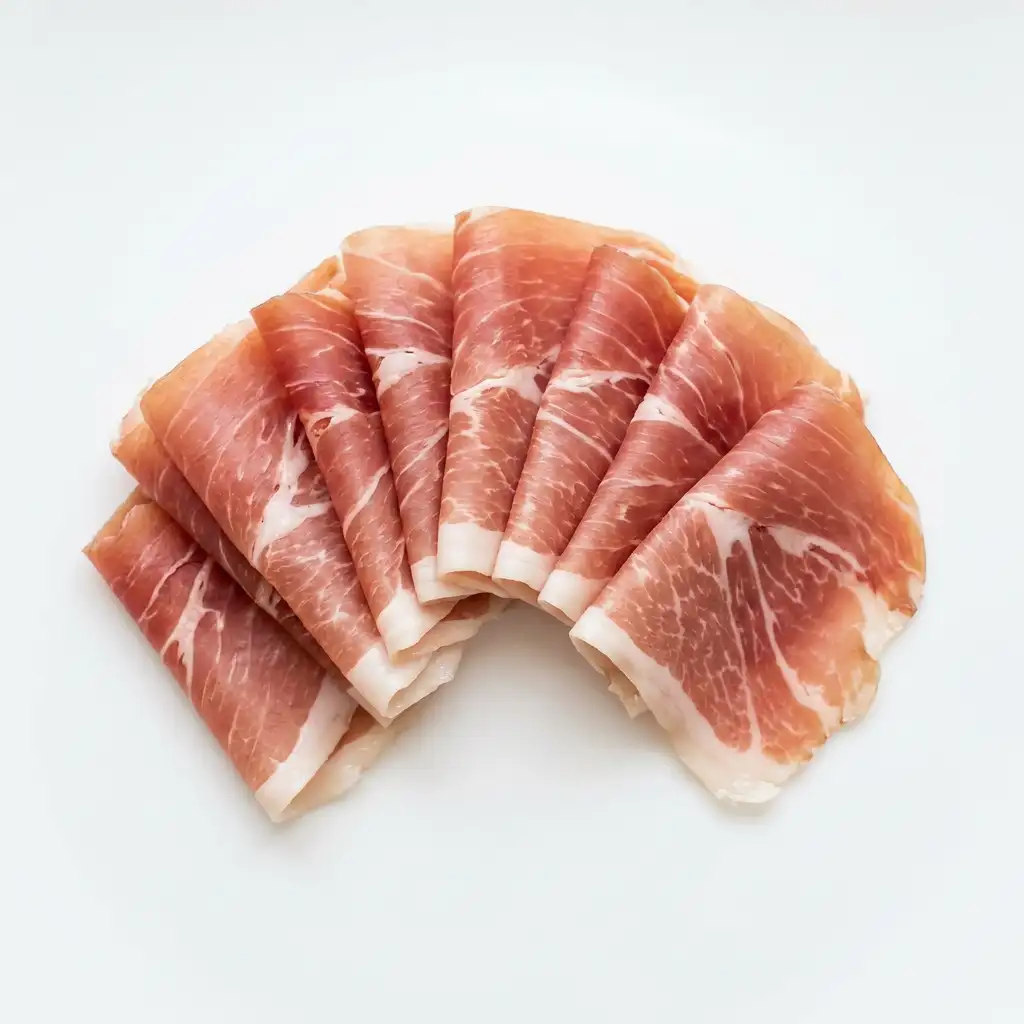
- Appearance: The slice presents a light red or pinkish color, bordered and marbled with pure white or slightly pink-tinged fat. The presence of small white dots between the muscle fibers (tyrosine crystals) is not a flaw, but a sign of a long and proper aging process.
- Texture: Extremely soft and silky when sliced, melting pleasantly in the mouth.
- Aroma: Intense, deep, and enveloping, with fragrant notes of dried fruit (hazelnut, walnut), bread crust, butter, and cellar.
- Flavor: A perfect balance between the natural sweetness of Parma ham and an elegant, restrained savory note, with a long and persistent finish.
Other Aging Periods on the Market
In addition to the 24-month version, various types of Prosciutto di Parma PGI are available on the market, each with unique characteristics suitable for different tastes and uses:
1. Aged 12–16 Months (The Classic / Young)
This is the minimum aging period required by the Consortium to receive the Ducal Crown brand mark.
- Characteristics: Light pink color and an extremely soft texture. The flavor is very delicate, predominantly sweet and milky, with distinct notes of fresh butter and white meat.
- Recommended use: Ideal for those who prefer a very mild taste; perfect in sandwiches, wrapped around buffalo mozzarella, or paired with summer fruits like melon and fresh figs.
2. Aged 18–20 Months (The Balanced)
A very popular middle ground found in traditional deli shops.
- Characteristics: The meat takes on a slightly deeper red hue. It remains soft on the palate, but the underlying sweetness is enriched with initial aromas of dried fruit and bread crust, while salinity remains very low.
- Recommended use: Excellent served on a mixed charcuterie board or paired with fresh, soft cheeses (such as squacquerone, crescenza, or caciotta).
3. Aged 30 Months and Beyond (The Reserve / Extra-Aged)
Obtained by selecting at the outset the largest legs with the right fat coverage, capable of enduring a long aging process (also found at 36 or 40 months).
- Characteristics: Slices feature a deeper, more compact red color. The texture is drier yet still melts in the mouth. The flavor becomes complex, deep, and slightly more savory, with an intense aromatic profile of walnut, toasted hazelnut, spices, and cellar notes.
- Recommended use: To be enjoyed on its own, sliced paper-thin by hand or machine, accompanied by a fine glass of wine (Traditional Method sparkling wine or a structured red) or paired with aged cheeses like 36-month Parmigiano Reggiano and a few drops of Traditional Balsamic Vinegar of Modena.
How to serve and general pairings
- Slicing and temperature: To best appreciate its flavor, it should be sliced paper-thin and served at room temperature (around 18–20 °C), allowing the noble fat to soften and release all its aromas.
- Bread and cheeses: It pairs wonderfully with crusty rustic bread, fried dough (torta fritta / gnocco fritto), and slices of Parmigiano Reggiano PGI.
- Wine pairings: Its ideal match is found in traditional Emilian sparkling wines like dry Lambrusco or Pignoletto, as well as structured white wines (Malvasia dei Colli di Parma) and Traditional Method sparkling wines (Franciacorta, Trento DOC).
Recipes
No recipes with this ingredient.